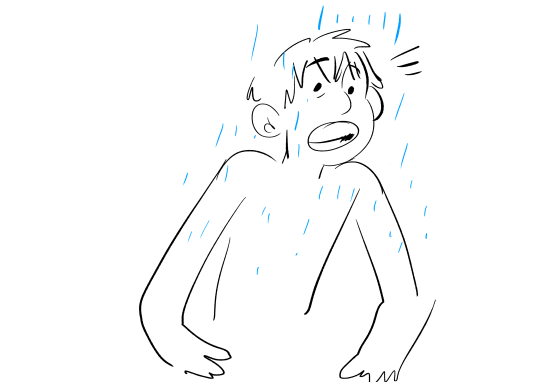
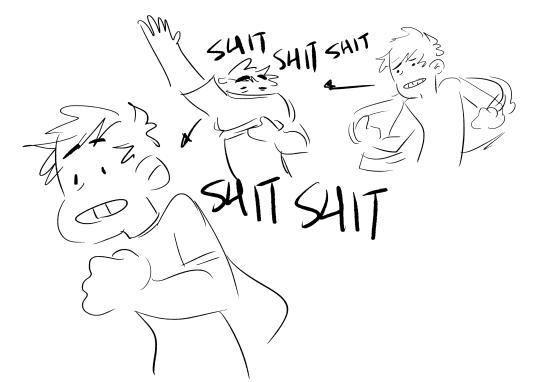
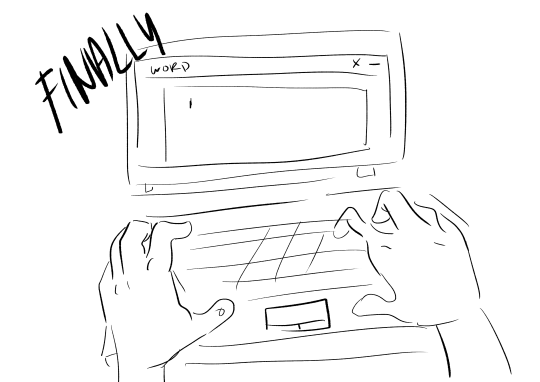
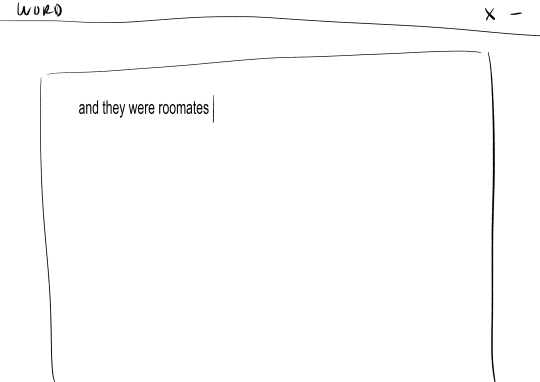
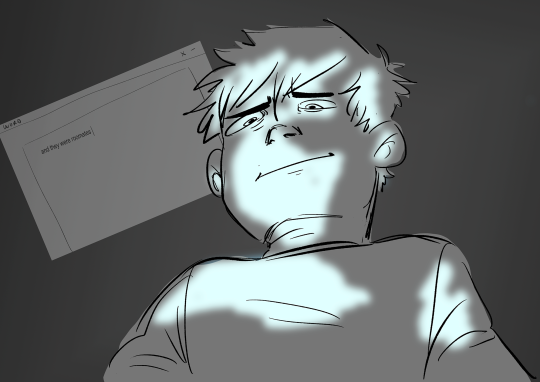
The real writer experience is standing in the shower and coming up with the most authentic dialogue with perfect phrasing and raw emotion in your head, then stepping out and drying your hair, putting on some clean pajamas and opening a word document to write down all your perfect ideas only to realize everything has evaporated.
I FEEL CALLED OUT
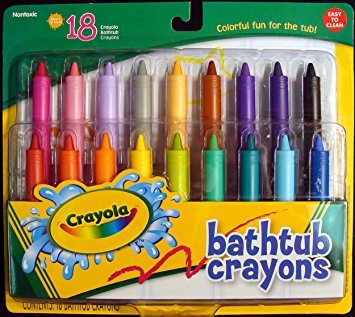
Never lose a perfect shower line again.*
*Remember to erase promptly if you share a bathroom with anyone.
I’ve used these to outline term papers. nothing like a bath to get your brain to finally kick into gear and figure out your damn thesis
As we sit on the cusp of changes to the Internet, after your other activities to support Internet freedom, archive your
fandom stuff.
Save the electronic files of your favorite online fandom works. Consider print-outs of your favorite online
material. And save paper
ephemera from fandom events.
Why save? Because you put the effort into a fanwork. Because you may be surprised when a fandom stays alive for years, or gets revived, or when an academic asks to cite your work. Because it’s stupidly hard to find items on Tumblr. Because, lo, in ages past, many fandom archives have risen and fallen, taking favorite fics off the ‘Net. Because it made you happy, makes you remember. Because you never know.
What can
you save?
Fanart
Stories you wrote
Epic comments on stories you wrote
Stories you love that other people wrote
Meta and meta-related discussions
Translations others did of your works
Physical items: paper ephemera, clothing, accessories, art prints and drawings.
Behind the cut…saving from Tumblr and AO3, delving into lost web sites, how to save computer files for the long term, and why I’m glad I saved physical fandom items from 10+ years ago.
So I am going to add onto this because there is, in fact, a professional archival interest in preserving fandom as well. I’ve spoken with some people about this before, but here’s the bottom line: PROFESSIONAL ARCHIVISTS WANT TO PRESERVE YOUR STUFF! HELP THEM DO THIS!
There are pre-existing fandom archives. Where are they?
The University of Iowa Special Collections. U o I is partnered with the Organization for Transformative Works (which runs AO3) to help collect and preserve fandom. They’re one of the biggests out there. Here are some of their existing collections
Pete Balestrieri, who curates the collection, is the man to talk to about this. Please consider giving him your stuff!
The Library of Congress has been archiving select webcomics, and now maintains the Web Cultures Archive which includes sites like Cosplay Paradise.
These are the big institutions doing collecting, but the archival profession and fandom need to start talking more. Born digital material is always at risk, and at present, it is mostly Western fandoms being preserved! Moreover, some facets like cosplay are currently overlooked, and that is something that needs better documentation!
Also don’t forget the Browne Popular Culture Library at Bowling Green State University, the oldest and largest library of its kind in the US!
And outside of the big active collaborations between between fandom and major special collections libraries, more and more university libraries and archives are offering free workshops on Personal Digital Archiving. If you’re not in school or there’s no local group offering workshops in your area, lots of archives and archival organizations now have guides online sharing strategies, tips, and sometimes even suggested freeware programs you can use to get started. While the guides are typically geared towards archiving/preserving stuff like family digital photos or research papers you wrote in school, you can easily apply the same strategies to preserving your fanworks and other fandom stuff.
Here’s a small sample of resources to get you started:
With this post I listed 10 outline techniques to help writes move their story from a basic idea to a complete set of arcs, plots, sequences and/or scenes. Or to simply expand whatever you have in hands right now.
If you have a vague story idea or a detailed one, this post is for you to both discover and organize. A few technique will work perfectly. A few won’t. Your mission is to find the one that works best for you. That said, I advice you to try out as many techniques as possible.
So, are you ready? Open your notebook, or your digital document, and let’s start.
1. Snowflake method: Start with a one-sentence description of the novel. Then, develop this simple phrase into a paragraph. Your next step is to write a one-page summary based on the paragraph, you can write about characters, motivations, goals, plots, options, whatever you feel like. From this point on, you can either start your book or expand the one-page summary into four pages. And, at last, four pages into a brief description of known sequences of scenes. Your goal is to make the story more and more complex as you add information, much like a forming snowflake.
2. Chapter by chapter: List ten to twenty chapters, give each chapter a tittle and a brief description of what should happen. Then, break each chapter into three to five basic sequences of scenes. Give each sequence a title, a brief description and a short list of possibilities (possibilities of dialogues, scenarios, outcomes, moods, feelings… just play around with possibilities). From this point on, you can either create the scenes of sequences with a one-sentence description for each or jump straight to writing. Your goal is to shift from the big picture to a detail-oriented point of view.
3. Script: This might sound crazy, but, with this technique, you will write the screenplay of your story as if it’s a movie. No strings attached to creative writing, just plain actions and dialogues with basic information. Writing a script will take time, maybe months, but it will also enlighten your project like no other technique. Your goal is to create a cinematic view of your story. How to write a script here.
4. Free writing: No rules, no format, no step, just grab a pen or prepare your fingers to write down whatever idea that comes up. Think of possibilities, characters, places, quests, journeys, evolutions, symbolisms, fears, good moments, bad moments, clothing, appearances. Complete five to ten pages. Or even more. The more you write, the more you will unravel. You can even doodle, or paste images. Your mission is to explore freely.
5. Tag: This technique is ideal if you have just a vague idea of the story. Start by listing ten to fifteen tags related to the story. Under each tag, create possible plots. And, under each plot, create possible scenes. Grab a red felt pen and circle plots and scenes that sparkle your interest.
6. Eight-point arc: With this technique you will divide your story into eight stages. They are Stasis, Trigger, Quest, Surprise, Critical Choice, Climax, Reversal and Resolution. The Stasis is the every-day-life of your main character. Trigger is an event that will change the every-day-life of your character (for better or for worse). Quest is a period of your main characters trying to find a new balance, a new every-day-life (because we all love a good routine). Surprise will take your character away from their new found every-day-life. Critical Choice is a point of no return, a dilemma, your character will have to make the hardest decision out of two outcomes, both equally important. Climax is the critical choice put to practice. Reversal is the consequence of the climax, or how the characters evolved. Resolution is the return to a new (or old) every-day-life, a (maybe everlasting) balance.
7. Reverse: Write down a description of how your story ends, what happens to your characters and to those around them. Make it as detailed as possible. Then, move up to the climax, write a short scenario for the highest point of your story. From there, build all the way back to the beginning.
8. Zigzag: Draw a zigzag with as many up and downs as you want. Every up represents your main character moving closer to their goal. Every down represents your main character moving further from their goal. Fill in your zigzag with sequences that will take your character closer and farther from the goal.
9. Listing: The focus of this technique is exploring new ideas when your story feels empty, short or stagnated. You’ll, basically make lists. Make a long list of plot ideas. Make another list of places and settings. Make a list of elements. And a list of possible characters. Maybe a list of book titles. Or a list of interesting scenes. A list of bad things that could happen inside this universe. A list of good things. A list of symbolism. A list of visual inspiration. A list of absurd ideas you’ll probably never use. Then, gather all this material and circle the good items. Try to organize them into a timeline.
10. Character-driven: Create a character. Don’t worry about anything else. Just think of a character, their appearance and style. Give them a name. Give them a basic personality. Give them a backstory. Develop their personality based on the backstory. Now, give this character a story that mirrors their backstory (maybe a way to overcome the past, or to grow, or to revenge, or to restore). Based on your character’s personality, come up with a few scenes to drive their story from beginning to end. Now, do the same thing for the antagonist and secondary characters.
So, when is it time to stop outlining and start writing?
This is your call. Some writers need as many details as they can get, some need just an basic plot to use as a North. Just remember, an outline is not a strict format, you can and you will improvise along the way. The most important is being comfortable with your story, exploring new ideas, expanding old concepts and, maybe, changing your mind many times. There’s no right or wrong, just follow your intuition.
OH SWEET JESUS I WAS SO DUMB AND BLIND THIS CHANGES EVERYTHING—
This is like the most obvious shit I feel like I’ve just ascended or something. How the fuck did nobody realise any of this?… HOW DID I NOT SEE THIS I AM DONE
reblog to save an artist’s life.
just a heads-up- it probably won’t work if your tablet and screen have different aspect ratios (been there with my first tablet, it stretched the drawing when I traced) but otherwise it’s worth a shot!
I can’t afford to not have art as a supplemental income.
I can’t afford to start over
I can’t afford to be here
I’m trapped
And you don’t know
And you can’t help
Okay, real talk* for a moment – tumblr sucks for making supplemental income from art. And it’s been getting worse over the years.
*yes I know there’s a ton more going on rn, but this is all I know how to help with 😮
Private clients from social media are finickier about one’s tumblr opinions than actual art directors. In my experience, ADs care more that you meet your deadlines and do the work. They don’t scrutinize your social media unless you cause an industry wide scandal or something.
Contact the art dept @ Tor.com, and Lauren Panepinto @ Orbit Books, and get on their radars if you haven’t already. There’s a lot of competition for those gigs, but there also seems to be a lot of demand for your style when it comes to book covers. Especially if you can, say, take a crappy photocollage and turn it into art. That’s a $$$ skill right there that I would absolutely be capitalizing on if I could.
I haven’t used Behance because it feels more design based than what I do, but I’ve heard good things from other artists in terms of picking up clients through there.
www.theispot.com is a site you have to pay for (and it is expensive, enough that I stopped using it), but I did get a broader range of big clients while I was there. At the time, they said they were willing to have their fee be taken out as a percentage of profits rather than an upfront cost (something like, you don’t have to pay it until your first paycheck, or something; it’s been a while). It did more than pay for itself many times over back when I used it, but that fee was a big pill to swallow.
https://www.hireanillustrator.com/ is another paid site, but WAY cheaper, and it does get results, but you do get a lot of ding-dongs who’ve never hired anyone before and don’t know how to work with artists. If I used them again, I’d probably set it to the “pro clients only” option or whatever it is – not to be snooty, but just to avoid people wanting $10 logos and shit.
And I know I mentioned it before, but really, try submitting to an art agent like www.shannonassociates.com. They do all the legwork for you, they find the work for you, you decided whether or not to take the work (which you are under no obligation to take if it doesn’t fit your schedule). No money up front, they just take a percentage of profits. They can get your art in front of the type of clients that would be perfect for what you do. And again, if you don’t have time for a job they offer, you just turn it down. Easy as that.
Some of the projects you’ve done over the years, there’s no reason that they can’t lead to more work. But that likely isn’t going to happen on just tumblr. I’d be dead broke if I was relying on tumblr. Tumblr is good for lots of thing, but it SUCKS as a marketing tool, even at the best of times.
Again, I know there is a TON more going on in your life, and this only addresses a tiny portion, but this is the one area I have experience with. Don’t let shitbags on social media make you think you have to put up with their abuse to make money or make art. They are not gatekeepers. Tumblr and twitter and fandom don’t have a monopoly on audiences or clients. I’ve been working as a fulltime artist for 12 years now, and I can tell you that yes, you ARE good enough to get real clients and work with bigger companies. You don’t have to put up with this tumblr “i didn’t like the tone on your personal blog so you’re fired” bullshit.
I have $24 to last me til Friday, what should I buy with it?
a pallet of ramen noodles
I hate ramen noodles tho
hmmmmm
bees?
Are you suggesting that I eat bees for a week
This is roughly what I make sure I have in my kitchen all the time along with rough estimates of local prices (MN). I buy a lot of things when they’re on sale and stockpile them.
instant oatmeal packets with fruit in them – $3 probably and this can be breakfast all week and maybe even a lunch or dinner too since you usually get 10 packets
bag of rice – $2-3 depending on size. 1 cup dry rice makes enough for about two meals depending on what you add in. if you get cheap rice, rinse it before cooking
canned beans – usually under $1 per can – mix the can with your rice and you have a meal. chili-spiced beans will make bean tacos. Rinse non-spiced beans before adding to anything.
Tortilla – usually around $3 but you get like 8-10 of them. Tacos, wraps, and quesadillas are all fair game here
lettuce – $2 max around here, either a head of something or bagged precut depending on preference, use as a salad or on tacos
protein other than beans of some sort – probably $5-7 for meat, $2-3 for eggs. sometimes I can get bags of frozen chicken breasts in this price range and each is usually 2 meals if I add in a bunch of veggies. fry/scramble eggs and add to any of the options.
your favorite stir fry sauce – $3ish
vegetables – $5ish. literally anything that you can 1. fry in a pan and 2. you’ll eat. fresh carrots are usually pretty cheap. get frozen if it’s cheaper and you’re strapped for cash/prep time on this part.
alternative to stir fry: pasta (~$2), fresh tomatoes (~$2), cheese (~$3).
cheese and fruit if you have extra – look if your store has loyalty cards for free that you can load coupons on for cheese there’s always one it seems like.
ahh thank you!!!
Reblogging because there’s never knowing who’ll need it.
Adding also: the single most nutritious food on earth is potatoes in their peel. Potatoes + some milk and butter = everything you need. They don’t last all that long, but they’re fairly cheap and the quickest cheat to “How do I not fuck my body up.”
(Cooked potatoes’ll last a while in the fridge. Potatoes nearing the end of their useful lives? Cook them to half-done first, figure out what to do with them later.)
Easiest baked potatoes: slice thinly but not paper-like, spread like cards, brush with oil (a silicone baking brush is totes worth the little it costs), spread salt and pepper (a little less than you think you’d like), cover with foil, stick in oven or toaster-oven at 150C for 40min. (If you have the patience, at that point click up to 180C, remove the cover and add 10-20min.) Reheats well, lasts in the fridge longer than it’ll take you to nom.
Dead-Animal-Free Whole Protein: some legumes + some grain. AKA rice and lentils, or rice and beans. (Maybe some fried onion for flavor; onion’s cheap and stays good a descent while. Fried onion makes everything taste better and keeps forever in the freezer, so frying up a bunch and keeping portions is not a half-bad idea.) (If going for the beans option – lentils are cheaper around here but fuck if I know what it’s like in your area – dump some tomato sauce and oil in; canola or soy are best health-wise, and far cheaper than olive; avoid corn.) Oh, what does instant couscous go for in your area? It keeps for fucking ever, it’s usually cheap, and it takes well to any and all added taste.
If you get to choose, black lentils taste the best and need the least soak-time (0-20min), green lentils are best for cooked stuff and red lentils are best in soups. (Red lentils + potatoes + root vegetables of choice + spices; cut into small pieces, cook, run through the blender if you wanna [stick blender’s awesome], freeze in portions.)
When possible, get instant soup mix. Get the good instant soup mix. (The kind that’s not made primarily of sugar, yeast or both. The rest is optional.) Dump 1/2tsp (or more, but start on the low end) into couscous, or chicken, or sprinkle over potatoes being stuck in the oven. Whatever. It’ll make most cooked-food-type things taste better. And again, lasts forever on the shelf.
If you can have eggs (goodness knows they’re sometimes expensive), dump some tomato sauce in a pan (tomato sauce lasts forever on the shelf), add some oil, onion/beans to cook in it, hot peppers if you wanna, then when it’s nearly ready crack an egg or two in. Hard-boiled eggs last a remarkably while in the fridge, so when eggs reach near the end of their usable lives, just hard-boil and stick in the fridge.
(Have eggs as often as you can, particularly as you have brain-shit going on. You need all the eggs, salt, and 60%-or-more chocolate you can get. Brains are made of cholesterol and salt, so folks with neuro or other brain shit need more of both. Potassium is also aces. You know what has the most potassium? Tomato paste.)
Grated cheese keeps in the freezer for ever. Grated cheese will make a lot of things taste nicer. Preserved lemon juice keeps forever in the fridge. Grated cheese + oil + lemon = instant and awesome pasta sauce that’ll liven up the weeks-old dry pasta in the fridge.
Slices bread also keeps well in the freezer. Try to have half a loaf or a loaf. Dry bread gets cut in cubes, mixed with oil and the aforementioned instant soup, stuck in oven at lowest until properly dry, then kept in an airtight jar to add to soups.
(Over-ripe tomatoes come cheaper. They get turned into soup or sauce, then frozen in portions.)
this is a very good post but why are we glossing over the fact that the alternative to ramen is bees
i have it on pretty good authority that bees are not an affordable eating alternative to ramen.
Seriously, bees are expensive
Trufax.
And speaking as someone who is also living off oatmeal, beans, and brown rice, if you need recipes, I have them!
Today I made 16 bean soup with chicken sausage and it was crazy good and I got 8 servings out of the one batch (froze half). I usually get the cheapest beans I can find, and GOYA bags of beans are usually $1-2. I soaked them overnight,rinsed them, and threw them in a gallon lidded saucepan with 2 boxes of chicken stock (also on sale for $2), two bay leaves, sauteed green pepper, onion, and celery, some garlic from a jar, about two tablespoons of dried herbs de provence,and the “fancy” bit was adding $6 bourbon and apple chicken sausages. You can actually sub veg stock for chicken and skip the sausage and make it vegan and it would still taste great.
Oh and I’ve been doing steel-cut oats. I don’t buy the name brand ones, I just pick whatever store brand/generic I can get for less than $4. They take about ½ an hour to make, but they’re super tasty and I make 2 cups
of dried oats at a time
with dried cranberries and that’s breakfast for 4 days at least.
I’ve also been making black bean soup, red beans and rice, and curried potatoes and chick peas. I got 100 quart and pint take-away containers from Amazon for $20 and they all stack neatly and are perf for one serving of whatever.
Additionally, depending on where you live, whole rotisserie chickens are something like $4-$7 and are easily 4 – 6 servings of protein and on TOP of that, if you stick the carcass in a ziplock bag and then the freezer you have excellent soup makings. Using bones in soup literally squeezes all viable vitamins and minerals out of the suckers. Soup made from lots of bones is great to keep around if you get sick, it’ll feed and sooth you relatively easily and as you get better you can add noodles. ON TOP OF THAT, a quarter to a half cup of soup broth added to a lot of dishes also adds those nutrients PLUS flavor.
A small list of random ass sites I’ve found useful when writing:
Fragrantica: perfume enthusiast site that has a long list of scents. v helpful when you’re writing your guilty pleasure abo fics
Just One Cookbook: recipe site that centers on Japanese cuisine. Lots of different recipes to browse, plenty of inspiration so you’re not just “ramen and sushi”
McCormick Science Institute: yes this is a real thing. the site shows off research on spices and gives the history on them. be historically accurate or just indulge in mindless fascination. boost your restaurant au with it
Cocktail Flow: a site with a variety of cocktails that’s pretty easy to navigate and offers photos of the drinks. You can sort by themes, strengths, type and base. My only real annoyance with this site is that the drinks are sometimes sorted into ~masculine~ and ~feminine~ but ehhhh. It’s great otherwise.
Tie-A-Tie: a site centered around ties, obviously. I stumbled upon it while researching tie fabrics but there’s a lot more to look at. It offers insight into dress code for events, tells you how to tie your ties, and has a section on the often forgotten about tie accessories
Even more:
Types of High Heels: A page describing twenty five different types of high heels. It gives a description and pictures. Shake it up from just “stilettos and kitten heels”
Random Job Generator: Exactly as it says. The site offer more generators like characters, plots, or town names.





 XI's Archived Tumblr Blog