did i mention how much i loved that Eun Tak was portrayed as doing everything for herself?
like, the woman she became wasn’t the result of Shin’s love, or knowing Shin, or him making her stronger etc because she didn’t remember him
that beautiful woman we meet at the age of 29 is all of her own creation. her goals, her strength and her willpower.
and going from that young girl who just needed someone to lean on, or a grown woman who helped herself throughout her worst, i think it was some really beautiful character development.
there was no cheesy “his love made me stronger”, it was her own love that made her the person she became.
What she means: I understand the Chronicles of Narnia was at its heart a fairytale with theological analogies for children. But why did Lewis never address how they had to adapted to life on Earth again. Why does no one talk about how the Pevensies had to grow up with a kingdom of responsibilities on their shoulders, only to return to Earth and be children. Take Lucy, she was youngest and perhaps she adapted more quickly-but she had the memories and mind of a grown woman in an adolescent body. Edmund literally found himself in Narnia, he went from a selfish boy to mature and experienced man. He found a purpose and identity through his experiences to come back as just Edmund, Peter’s younger brother. Did people wonder why the sullen, sour boy came back, carrying himself like a wisened king? Did his mother wonder why he and Peter suddenly got along so well, why they spent so much time together now? And Susan, the girl of logistics and reason came back with a difference in her. She learned how to be a diplomat and ambassador, Susan the Gentle had to live to endure not-so-gentle circumstances. She had the respect she wanted, only to be just another teen girl. And Peter, he entered the manhood and maturity he so wanted. He earned the responsibility and stripes he yearned for. He learned to command armies and conduct the menial tasks demanded of a king to rule a nation. But he came back, appearing to be just anther glory-hungry boy. Not to mention the PTSD they must have struggled with. Especially Edmund. How often did he wake up in a sweat, screaming a sibling or comrade’s name? His parents believe it’s the war, but it’s an entirely different one he has nightmares about. How often did he have trouble with flashbacks and mood swings? And how many times did he and Peter sit over a newspaper or near the radio listening to reports on the troops. How often did they pour over lost battles and debate better strategies. Did their parents ever wonder why they seemed to understand flight war so well? How long was it before they stopped discussing these things in front of people? Why does no one talk about this???
Why am i fucking crying
Why does no one talk about how the Pevensies had to grow up with a
kingdom of responsibilities on their shoulders, only to return to Earth
and be children
It’s not addressed because it’s understood. It was the shared experience of the generation. You are describing coming home from World War One, battle wearied and aged beyond belief, but walking around in the body of a youth. C S Lewis went to the front line of the Somme on his nineteenth birthday and went back to complete uni in 1918 after demob.
Not seen it with this very very pertinent addition before
YES! MY GUY THIS IS WHAT I’M TRYING TO SAY THANK YOU
Spoon ghost was the exact moment Undertale clicked for me. You can leave the bed at any time, so you have to choose to wait it out to see what happens.
My fear of spoon ghost, only to realize they were actually a nice mom spoon, was where I first had the thought “maybe I’m not doing enough to see the good in other people.”
Like I really did have that “shit man… try harder at liking people” feeling that stuck with me and changed me. It took up until that point in the game to fully understand what Undertale was trying to say.
It was a moment of genuine tension and discovery and I JUST
MAN
SPOON GHOST IS SO GOOD, WHAT DID WE DO TO DESERVE SPOON GHOST
I just read “Hufflepuff isn’t a house where you can stick people who don’t fit in the other houses”
But the thing is? It literally it is, Helga Hufflepuff said she would take the rest.
She preferred the loyal and hardworking for her house, but felt that everyone should have a chance. Not a Gryffindor, a Slytherin, or a Ravenclaw? Not a loyal, hardworking Hufflepuff either?
Well that’s okay. Helga Hufflepuff founded her house believing anyone should be given a chance at Hogwarts. Those four archetypes aren’t all that matter, and if you don’t fit any of them Hufflepuff will still welcome you.
Godric/Rowena/Salazar were perfectly happy to say “You don’t fit into our houses, you can’t come to Hogwarts” and it was only Helga who was willing to say “You might not fit my ideals of a student, but you can still be in my house”
Like. I think that’s super cool. I don’t like it when people shoehorn Hufflepuff into being one and the same like the rest of the houses, sure, loyalty, hardworking, kindness.. that’s the priority.. but it’s truly a place for everyone. And that’s where Hufflepuff’s kindness shines the most.
‘I’ll teach the lot And treat them just the same.’
‘Good Hufflepuff, she took the rest and taught them all she knew’
Hufflepuff’s pride as a house comes not only from loyalty, hardworking, toil, and kindness, but from diversity. Something the other founders did not realize the importance of.
I never really thought about this- but you are 100% right.
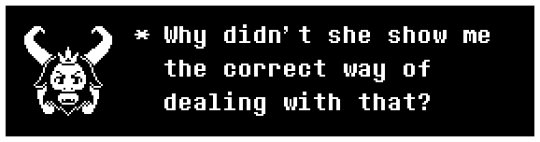
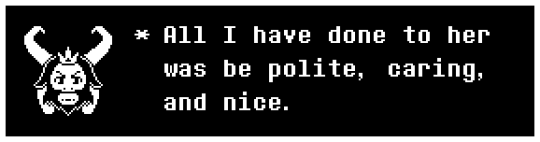
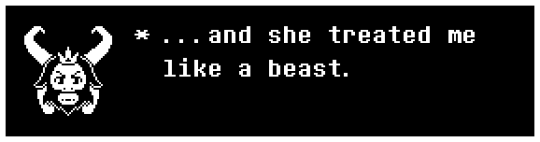
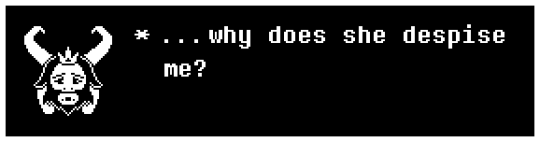
AU where Asgore gets upset because of how Toriel treated him.
GOOD.
YES.
I like this. I’ve always wanted Asgore to look back on Toriel’s treatment of him and know that it wasn’t right, and that anger towards the culprits of the deaths of their children maybe wasn’t the BEST reaction, but it’s far from unrealistic or nearly as outrageous as Toriel seemed to make it be.
Man, fuckin’ cosigned. I was over Toriel’s whole deal with that by the end of the game, for real.
Molly and Arthur Weasley raised seven kids on one government salary.
Molly and Arthur Weasley raised those seven children to be courageous and loyal and kind.
Molly and Arthur Weasley were purebloods who made it a point to be known as “the biggest blood traitors there are”.
Molly and Arthur Weasley raised Fred and George during their accidental magic stages without letting the house burn down.
Molly and Arthur Weasley treated Harry as their own child, not because of his fame, but because he was Ron’s friend and he was in desperate need of a family.
Molly and Arthur Weasley made sure that everyone who entered their home felt loved and cared for and well fed.
Molly and Arthur Weasley won money and spent it on a family trip to see their son and help their daughter out of the depression she was sinking into.
Molly and Arthur Weasley sent Easter eggs and Christmas sweaters and fudge to their children while making sure to include enough for friends.
Molly and Arthur Weasley went out of their way to secure two tickets to the Quidditch World Cup on top of the eight for their own family, just to ensure that Hermione and Harry were included.
Molly and Arthur Weasley warned Harry about Sirius Black and tried to keep him with them after Voldemort’s return and tried to shield him from Order business because they remembered how young he was, how utterly unfair it was for the world to expect so much from him.
It’s no secret at this point but what really makes Goblin so interesting is the way the immortals in the drama are basically two giant dorks who have trouble navigating day to day life. It’s this aspect of seeing two powerful beings with two great tragedies of their own having petty fights and acting like bickering kids. I doubt this show would be half the fun it is if these two used their powers and might to be what it is expected them to be. But the writing has treated their powers as a simple day job. Sure, it is a part of their life but it isn’t what their life is ALL about. We see the Reaper doing his job of collecting souls and keeping a meticulous record of it all. Kinda like how a person works in a office. We have even seen the Goblin acting like the Guardian when he comes across reincarnated people from the past. He even goes around granting miracles and occasionally, mingling with the affairs of life and death.
Now instead of lingering on these aspects, this show has taken the route of exploring the more domestic side of these two characters. It spends more time showing them dining together or talking about their troubled love life than being mighty. They are all about the troubles of daily life than matters of the supernatural. And it’s because of this that when they do talk about “God”, it looks more like two people discussing a Boss they work for but they haven’t seen.
It’s here that Goblin succeeds as a supernatural show. Whereas other shows with the themes of ghosts or immortal beings walking around on earth would do anything to establish a world of supernatural and creating rules for it, Goblin emphasis more on the world that WE are part of it. It makes sure to establish the magic but instead of basing the entire story around that magic, it integrates that magic into day to day life. For instance, Eun Tak can see ghosts. But her encounters with the ghosts aren’t a regular occurrence. That is a part of her character, not what her character is all about. Deok Hwa practically lives with a Goblin who can conjure up gold when drunk but his struggles are still so materialistic where all he wants is his credit card. The supernatural of this show isn’t supernatural at all..it is treated as something very normal. It rains when Goblin is sad, because that’s just how it is. It’s a fact and it’s treated as a fact, the show just rolls with it and the audience is supposed to do. And we do. Because the tone of the show doesn’t go all “ooooh!” and “aaaahh!!” at the supernatural, we as an audience don’t go all oooh and aahh at them. The supernatural isn’t the point here. It’s the normal, regular interactions done by these supernatural immortal beings that are the soul of the show. Let’s face it, the more memorable scene of the show won’t be Goblin granting EunTak’s mother life after the accident..it will always be Goblin asking Grim Reaper help to look cool in front of ET in case she summons him again. The normal that simple humans do, not the supernatural.
prevented her from building the same faith and resolve in Narnia that her sister and brothers were able to maintain. Like a child, she was driven by a desire for permanence, as well as for something that fulfilled her idea of what was most “grown up.” In Narnia’s physical, incontrovertible absence, she strove to fill the hole it left, and subdue her insecurities that told her she was very silly for having kept up an imaginary game for so long, with material things like “lipsticks and invitations” that the physical, incontrovertible world she was living in there and then approved of as “grown up.” My two cents anyway, and I agree with you about Lewis’s choices of distraction. It was nothing sexist, merely appropriate to the person he was writing about.
Thank you for adding this, anon!! I never considered, as a child, whether Susan was trying to fill the gap left by Narnia, but it seems to be a universally accepted conclusion and one that’s hard to escape.
I’m just going to leave this snippet from the end of Prince Caspian here:
“This way,” said Susan, who seemed to know all about it. “Back into the trees. We’ve got to change.”
“Change what?” asked Lucy.
“Our clothes, of course,” said Susan. “Nice fools we’d look on the platform of an English station in these.”
“But our other things are at Caspian’s castle,” said Edmund.
“No, they’re not,” said Peter, still leading the way into the thickest wood. “They’re all here. They were brought down in bundles this morning. It’s all arranged.”
“Was that what Aslan was talking to you and Susan about this morning?” asked Lucy.
“Yes—that and other things,” said Peter, his face very solemn. “I can’t tell it to you all. There were things he wanted to say to Su and me because we’re not coming back to Narnia.”
“Never?” cried Edmund and Lucy in dismay.
“Oh, you two are,” answered Peter. “At least, from what he said, I’m pretty sure he means you to get back some day. But not Su and me. He says we’re getting too old.”
“Oh, Peter,” said Lucy. “What awful bad luck. Can you bear it?”
“Well, I think I can,” said Peter. “It’s all rather different from what I thought. You’ll understand when it comes to your last time. But, quick, here are our things.”
At the end of The Voyage of the Dawn Treader, when Lucy and Edmund receive their walking papers, we get some insight into that unseen conversation.
“Dearest,” said Aslan very gently, “you and your brother will never come back to Narnia.”
“Oh, Aslan!!” said Edmund and Lucy both together in despairing voices.
“You are too old, children,” said Aslan, “and you must begin to come close to your own world now.”
“It isn’t Narnia, you know,” sobbed Lucy. “It’s you. We shan’t meet you there. And how can we live, never meeting you?”
“But you shall meet me, dear one,” said Aslan.
“Are – are you there too, Sir?” said Edmund.
“I am,” said Aslan. “But there I have another name. You must learn to know me by that name. This is the very reason why you were brought to Narnia, that by knowing me here for a little, you may know me better there.”
The Pevensies have a purpose in their own world which might, in the scheme of things, be greater even than the one they serve in Narnia. They have to bring what they have learned in Narnia into the ordinary business of their everyday lives.
It’s clear from the way he speaks, after he learns this, that Peter is sad – but he can bear it, because he understands it. He has begun to catch on to the fact that Aslan is not one thing in one place only. (Susan, by contrast, is a little brisk. Throwing her emotions on the subject aside, intent only on getting back into her ordinary clothes and not embarrassing herself on the train platform. Foreshadowing?)
By the time we see Lucy in The Last Battle, she, too, has come to know Aslan by his true name: "In our world, too, a Stable once held something inside it that was bigger than our whole world.”
They were supposed to become closer to their own world; those were their instructions. By never making the adjustment, Susan becomes more, not less, detached from her surroundings. Not only has she failed to find Aslan in our world, she’s now willing to deny that she ever found him anywhere else.
A lot of people see the loss of Susan’s siblings as a punishment. “A god who would punish me for liking nylons and parties by making me walk through that school dining room, with the flies, to identify Ed, well … he’s enjoying himself a bit too much, isn’t he?” says an older woman who may or may not be Miss Pevensie in Neil Gaiman’s utterly sickening short story The Problem of Susan. “Like a cat, getting the last ounce of enjoyment out of a mouse.” I couldn’t agree more, if the train accident were a punishment. But Susan, you must remember, never did what she had to do in the real world–whatever that was. She’s still got a life left to live. Possibly a very long one.
And she’s the representative of her family on Earth. Father Christmas gave Susan her horn because she was the most doubtful and frightened of her siblings. In contrast to Lucy, whose bottle of healing cordial makes her the helper everyone is looking for, Susan’s horn ensures that she will always be able to find help–someone will come to her assistance if she needs it. Aslan has taken a special and deliberate care of her. It’s fascinating, then, that when another person uses the horn, it’s Susan herself, with her siblings, who comes to the rescue. And that’s my hope for Susan in the Shadowlands, that she goes from being aided to giving aid. There might be hundreds of people in the real world who need her. Short of a quick trip to Narnia, is there a better fate than to be the answer to everyone’s prayers, to be the one who comes at the summons of the horn?
The horn which, by the way, Caspian kept at Susan’s own insistence. Lewis leaves the door wide open for her to rejoin the others. But not until the time is right.
You know what i think really makes Ford endearing??
Like he’s fresh out of the portal, where he’s been stranded for thirty years. He learned how to survive between getting chased by bounty hunters and some actually nice beings – still though… not an EASY set up.
And there’s the cliche of the guy with a tough exterior that it takes months with to get a glimpse of his soft side. And you see this type a lot with the characters that had to go through a difficult time of survival that they’ve only recently come out of, like say surviving 30 years while being a wanted man in an unfamiliar place.
Ford’s not like that though.
It actually doesn’t take much of anything to see him being lighthearted or smile when there’s nothing dangerous nearby.
He’s actually… a really upbeat guy, all things considered. He smiles and everything, quite a fair bit of the time actually. hECK, you remember that guy interacting with the family while fixing the lightbulb?????
Kanan The Last Padawan #2 Obi-Wan Kenobi makes an appearance. Was crying from page 1 of this issue but THIS oh THIS made me cry harder
oh no, oh no, oh no, oh NOOO.
I remember seeing the clip of this recording from Rebels, and I still think this is one of the most important Obi-Wan moments I’ve ever seen.
In Revenge of the Sith, I always figured Obi-Wan just changed the beacon broadcasting out of the Temple from “come home” to “stay away,” like a simple coded signal that Jedi would recognize, a string of…beeps, or Morse code, devoid of details or any real context.
But instead, it was this. And this is everything. This is why I see Obi-Wan as a teacher, a consummate teacher, a teacher at heart, a teacher to the bone. Because yes, this message is meant for any surviving Jedi, but it’s phrased for the children, for the ones who can’t take care of themselves and don’t know what to do next. Look at it – Caleb is just a child, and Obi-Wan’s message is structured for people like him. Adults would know what to do regardless, would recognize immediately the need to disappear, to stay hidden. Adults would be disciplined enough to heed even a simple string of “stay away” beeps.
But children – children, confronted with the total and utter disintegration of everything they know, and most likely the elimination of the person who is supposed to take care of them – children who heard a simple and unexplained “stay away” would never listen and obey. They couldn’t. They would try to come home. They wouldn’t know what else to do.
Obi-Wan knows that. That is what teachers do; they anticipate what their children need, what their children are going to do next. That’s why he says what he does, that’s why he’s so explicit, that’s why he shows them his face and tells them exactly what to do next, that’s why he steps in where their fallen teachers can longer provide direction. He knows those children know his face. For all he knows, he may be the last adult figure those children have to look to. And so he gives them their last assignment, in terms they can understand; he gives them a last benediction, a last breath of familiarity, he gives them one last utterance of the short string of words that probably mean more to Jedi children than anything else in the world.
His message tells them he knows they are out there. His message tells them he still believes in them. His message tells them to have faith, and reminds them – they, the decimated people – that their teachers have not forgotten them. That someone is still thinking of them first, that there is an adult out there who remembers them, who knows that they need direction. His message tells them that they are not alone, no matter how dark the coming years will be.
I just…I’m imagining how important that would be. For any Jedi, but for the children especially. For the horrified and shell-shocked Caleb Dume’s of the world. That holoplate is a lifeline, and of course Obi-Wan is the one who threw it, because Obi-Wan is a teacher first, last, and every bit of himself in between. His life is for the Jedi, and their children, and while he, like any teacher, knows he can’t save all his people’s youth singlehandedly, he knows he can at least give them a fighting chance.











 XI's Archived Tumblr Blog