I just…. i love this transition so much. Mustang at least gets a couple frames to straighten up his gremlin ass self but Ed and Al are all ÓwÒ and ( ͡° ͡°<~ to Business in 0.0001 seconds. it utterly captures the exact emotion of the moment when you and ur friends are fucking the hell around & there’s a knock on the door and for 3 full seconds the whole gang is ready to commit murder before you remember it’s the pizza guy. Just… Hawkeye’s gun gliding casually into view. The single frame delay between Ed and Al. I am being totally 100% unironic when i say this is one of my favorite pieces of animation ever
Roy Mustang snaps his fingers accidentally (while wearing his gloves)
What people think will happen: fire, death, destruction
What will actually happen: a small spark
Why people are wrong: they think Roy’s Flame Alchemy actually creates flame, whereas what he’s alchemizing is the oxygen concentration of the air. Alchemy takes concentration and intelligence so he can’t accidentally move air particles around to make the air so oxygenated as to be flammable. The finger-snap just ignites the oxygen. If the air is normal, it’s not going to ignite.
Extra fun fact: you can probably tell if Roy Mustang is about to set you on fire. The air will feel intoxicatingly easy to breathe because it’s pure oxygen. During the war, Ishvalans probably learned to GTFO if they felt heady and energized.
Extra extra fun fact: Roy Mustang doesn’t need to set you on fire to kill you. He can probably just remove all the oxygen from the air around you, and you’ll suffocate.
The point of this post: flame alchemy is both really cool and really simple.
The kicker: to use flame alchemy effectively, you probably have to visualize the shape of the oxygen cloud that’s going to form. This probably requires a lot of focus.
One of the things I like a lot more about Trisha in Fullmetal Alchemist as opposed to Brotherhood, are some subtle hints about some of her personality flaws. Like, you get the feeling she may have been pushing some unhealthy things on to Edward and Alphonse.
It’s very, very, subtle, as for the most part she’s just a perfect wonderful mother, but let’s take a look at what we know and what is said explicitly in the series about her.
We know that Trisha loved Hoenheim very deeply, but unlike in Brotherhood, it is never explicitly stated how much she knew about his true identity. From the looks of it, not very much. Hoenheim leaves her as a way of hiding his decomposing body, suggesting she hadn’t known about it before. Hoenheim also never made any promise to return to her someday, so from that we can assume when he left her it was probably a traumatic parting she didn’t completely understand.
Rather than resenting him for it though, or hating him even, it looks as though she just continued to love and long for him to return to her to the point it might have made her physically ill. Perhaps even, dying of a broken heart? (ugh.)
But yeah, I do find that to be the implication when you take into account her dynamic with Edward and Alphonse. Everyone else in the Eastern Region Ed and Al encounter despises Alchemy and Alchemists. Even kind old Pinako is wary of it, especially considering the death of her son and his wife. Hell when Ed and Al try to transmute her a doll, Winry breaks down into tears in fright. But Trisha is immediately delighted.
She lets them use all of the books in Hoenheim’s study and for the most part encouraged them to use Alchemy as much as possible. This is a stark contradiction to Izumi, Ed and Al’s other mother figure, who refuses to even fix a little boy’s toy train with alchemy because it would be unnecessary.
Not to mention the realization later on that Alchemy is essentially an evil practice that uses the energy of those who have died in the other world, so Trisha’s encouragement of it cannot be a good thing.
Then there’s the competitive nature of Ed and Al’s relationship that Al brings up several times in the narration of episode 3, Mother. “We competed with each other for her attention getting deeper into the science that made you feel like magic.” The reason the two become so engrossed in Alchemy is specifically because she encouraged it and obviously would give them special attention when they did a transmutation for her. As for the competitiveness, I do think it is implied very much in certain scenes that Edward and Trisha’s relationship is very different than Alphonse and Trisha’s relationship. I’m not saying Trisha played favorites or that she neglected Alphonse, but considering Edward’s more apparent obsession with both her and alchemy, as well as the fact that as the older child he was probably privy to more responsibility as well as the benefit of being the first born, not to mention his clear resemblance to Hoenheim both in appearance and personality, is it too farfetched to assume she may have been a bit more affectionate with him, letting him get away with more than Alphonse did. It would explain why Alphonse out of the two often times seems the more understanding and responsible one. Maybe even why he holds Edward in such high esteem, because it was obvious Trisha did too.
And then of course there’s the clincher, Trisha’s last words. In the manga and in brotherhood, they’re left unknown, but in the original anime, there’s a pretty dark twist to them. At first she’s laying out all the things her kids need to know, telling them where their money is, asking them to take care of each other and stay by each other’s side. But then she makes a very sad request of Edward, by asking him to transmute her a wreath of flowers the way her husband always used to, presumably to put on her casket. Now of course its implied she’s not entirely in her right mind when she requests this, and this is more of a subconscious want, but it says a lot about her and how she’s raised her children.
Alphonse says it all, she loves their alchemy because it reminds her of Hoenheim, the man who broke her heart and left her. So really she was almost substituting the hole he’d left in her life with her children, encouraging him to grow to be like him. Then her last request, is really just longing for Hoenheim again, and it seems pretty inconsiderate to Edward and Alphonse, considering how much Edward despises Hoenheim, (even at that age) and of course by ignoring Alphonse entirely in the request and making it specific to Edward. It’s just one sentence but it says so much.
And again, that’s not to say Trisha was a bad mother, like I said she’s still the perfect mother archetype. She’s just like every other character in the series, acting on a selfish impulse, maybe even subconsciously, without much consideration for the rest of the world at large. After all, how different would everything have turned out if Trisha had just encouraged Ed and Al to garden, or had scolded them for scaring Winry that first time? Like of course the first things these kids would do in the wake of losing their mother was try and use alchemy to fix everything. That was all she’d ever encouraged them to do.
Either way, it just adds a small level of tragedy and depth to her character that I found was absent from Brotherhood, where she was perfectly understanding and perfectly perfect the whole time. It helps me feel a bit better about her being fridged because she had more impact on Ed and Al’s story outside of dying.
a seemingly inoffensive comparison post for your dash
OK but see this point in the series has never really made that much sense. Like, OK, Ed sees the resemblance in Envy’s real form, I get this, but until this point Ed has no idea about his dad’s relationship to the homunculus, and Hohenheim and Dante conceived what would become Envy 400 years ago. There’s like… zero reasons why Ed’s recognition makes any sense.
*cracks knuckles*
Edward totally knows at this point that Hoenheim and Dante were a thing. If you were paying attention, Izumi pulls out a smutty letter Hoenheim wrote Dante nearly a millennia ago and Edward reads it and then presumably went out in the garden and barfed, and Edward confronts Hoenheim about it in London at the beginning of this episode. He knows Hoenheim was going around fucking other women before Trisha, especially after meeting Dante (also in this episode.) Like it’s pretty goddamn obvious.
Not to mention Envy has made it clear on multiple occasions while Edward was in the room that he has a major grudge against “some bastard” who’s blood is in Edward’s veins and who’s sperm Edward might be. Like Edward is not Goku, okay, Edward can intuit shit.
But Edward also has a big thing for denial what with the whole Sloth thing which he totally should have figured out eons ago but just didn’t want to admit to himself that he was that big of a fuck up.
So at this point Edward knows
1. Hoenheim is a manslut who dated an evil psychopath named Dante. 2. Dante creates Homunculus. 3. Homunculus are made when someone attempts Human Transmutation. 4. Hoenheim DID attempt Human Transmutation because he’s got the *clap* 5. Envy is the deputy ringleader of the Homunculus. 6. Envy has a major grudge against him and Al specifically. 7. Envy has mentioned twice now said grudge is because of who they’re related to.
He’s just gotta put two and two together and then boom Envy transforms and it’s all made pretty goddamn clear. Not only because of how much he resembles Hoenheim but because of how much he resembles Edward himself. The fucked up thing here, and the reason Edward hesitates is not only the realization that this monster is his brother, (which IDK brothers are kinda an important thing in FMA) but also because he sees himself in Envy’s reflection. He himself just barely dodged becoming the creature in front of him. (It’s not a coincidence Edward is one of the people Envy transforms into when they aren’t in disguise.) There’s a moment of real sympathy from Edward, and that’s all the hesitation Envy needs to murder him right then and there.
The point of sympathy later gets driven home at the end when both of them meet at the gate and Edward tries to warn Envy about how dangerous it is. He even sheds a few tears when Envy leaves, crying because he’s losing both of his brothers. (This is later all undone in CoS but I blame that on the writers not getting the mini-series they obviously wanted.)
So this is all really well established, foreshadowed, and lead up to, and the reveal is a pretty big moment for Edward’s character where he really has to confront the humanity of the homunculi, and how much he shares with them. Sloth is the drawback, Envy is the knock out.
OKAY I AM WATCHING A VIDEO ABOUT FMA AND I AM SCREAMING
So you know how the main villains are all adapted of the 7 deadly sins right
And ironically it happens that all of them will follow the description of the punishments in Dante’s Inferno for each sins. (also friendly reminder Dante was the name of the villain in the first anime, I just can’t)
So, quoting the video (which is in French here) and spoiling to death :
Those who committed the sin of Pride are condemned to be constantly crushed under the weight of a rock. In FMA, Pride will end up crushed under rocks.
Those who committed the sin of Envy are condemned to have their eyes being sewed. In FMA, Envy will have his eyes being burned out multiple times.
Those who committed the sin of Wrath are condemned to have their limbs being pulled away. In FMA, Wrath lost both of his arms against Scar.
Those who committed the sin of Sloth are condemned to walk for ever without being able to stop. In FMA, Sloth spent all his life digging the tunnel.
Those who committed the sin of Greed are condemned to share the same body with people who would give everything away for others, the opposite of Greed. In FMA, Greed will then share his body with Ling, his total opposite.
Those who committed the sin of Gluttony are condemned to be bitten and eaten by Cerberus. In FMA, Gluttony will be eaten up by Pride.
Those who committed the sin of Lust are condemned to be exposed to burning winds and to go through a wall of flame to clean themselves away from their sin. In FMA, Lust is being burnt to death by Roy
As for Father, in Alchemy it was specified that if one managed to create a Homunculus, this one would never be able to leave a little bottle, which is the case of Father. Moreover, the first man to claim having created a Homunculus was named Philippus Theophrastus Aureolus Bombastus Von Hohenheim.
Moreover, the one who ordered to create Father was the king of Xerxes who wanted to access Immortality. But his plan will turn out against him and Father will provoke his death. In our reality, Xerces is dead killed by one of his captain which plan was to take over his empire to divide it between his Seven Sons. The parallelism between Father and the Homunculus is then obvious, but the story doesn’t stop there, as the story tells that the Seven Sons had been killed as well by the Son of the King, who had for Mother the Queen Amestris.
Can you hear me scream on the other side of your screen on how clever this manga is
Tbh, I don’t know why some people call fma 03′s ending dark and angsty?
Like, if that’s what the writers were going for, they woul’ve ended it full stop at episode 50. Now that ending, I can tell u from personal experience, would’ve been the epitome of dark and angsty.
But they didn’t. Instead, we got episode 51, and then the movie. Both of which offer up a message of hope.
Hope in the face of an imperfect world. Hope even in a world where the work you put into something might not reward you with something equal to your efforts. Hope in all its raw form, struggling and fighting on.
I don’t know about you guys, but that ending gave me so much hope at a time when I really, really needed it. So it makes me more than a little upset when I see posts condemning the ending, acting as if it holds no meaning simply because it’s considered sad.
You know what a think goes underappreciared? That fma has two complete alternate universes. People spend so much time arguing over which is better that they forget that the have more content then most complete anime or manga series, and that said content isn’t just copy paste from the manga. We get to have unique avenues explored that the manga didn’t touch on, like the Elrics being in our world or more time with characters like hughes and sheska, at the same time we get to see the manga acted out in truly beautiful animation. Some series don’t get that they get the anime exclusive ending and thats it.
Or worse, they get an anime exclusive ending and then a reboot that tries desperately to recon the anime exclusive ending and the fan base that doesn’t have access to the manga is left horribly confused. But no, FMA gets two separate anime series that they can choose from they can choose which they canon they want to abide by for a story. We didn’t have to worry about getting 700 episodes of pointless filler that creates seasonal rot and unessasary character derailment to get our manga ending. We don’t have to debate about what parts of the series are canon because they are two separate timelines, not one big mess with an emergency ending in the middle of the series. We even got movies to tie into both series! How many other franchises get that treatment? Just something to think about….
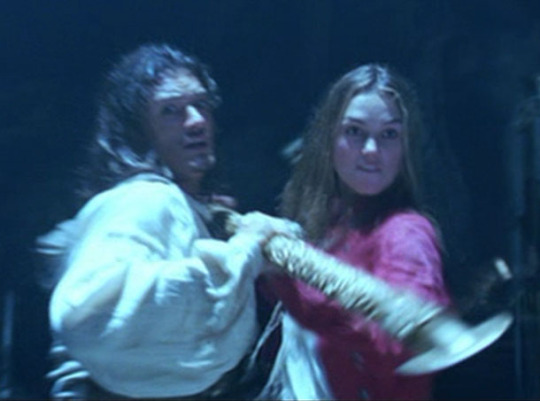
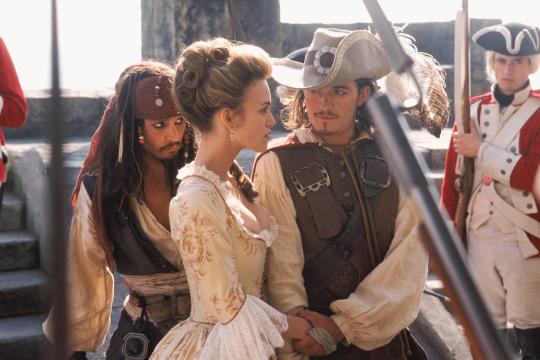
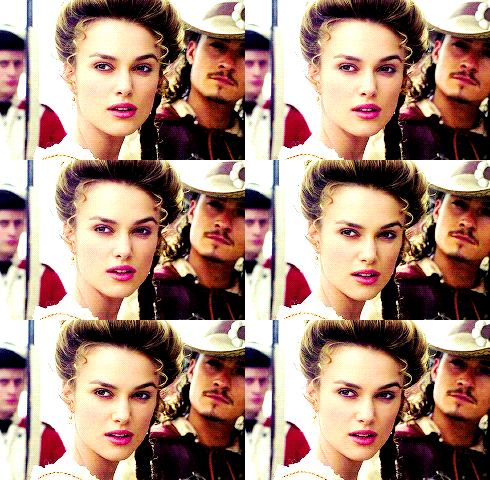
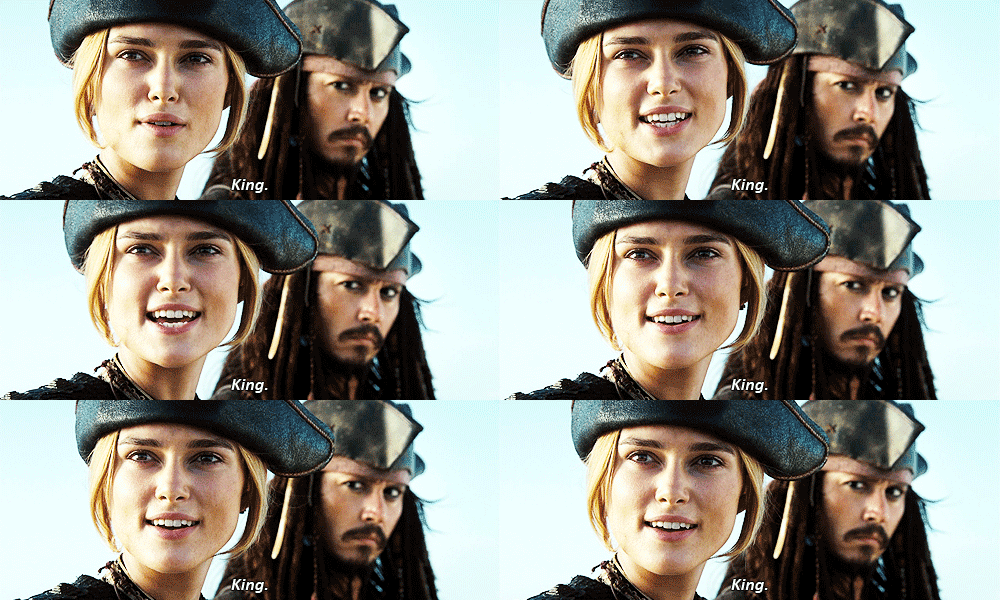
I love this because you have Elizabeth who couldn’t even defend herself in the first one to becoming this master sword fighter and leader of ALL pirates. You watch Will who was just this angsty little brat head over heels for Elizabeth become this grown man who faced all his demons.
and then there’s Jack
“Elizabeth who couldn’t even defend herself”
Do you mean…
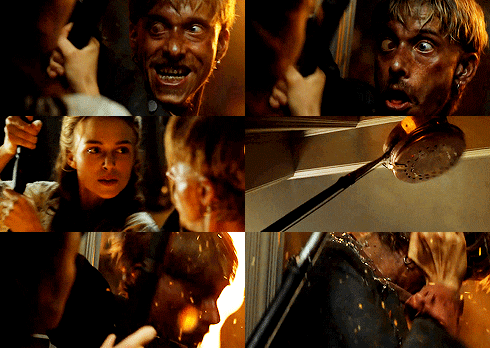
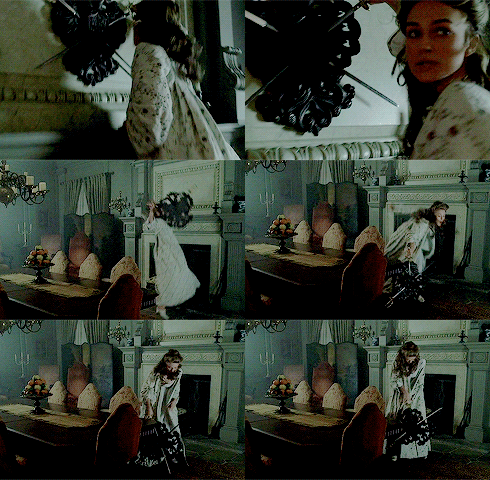
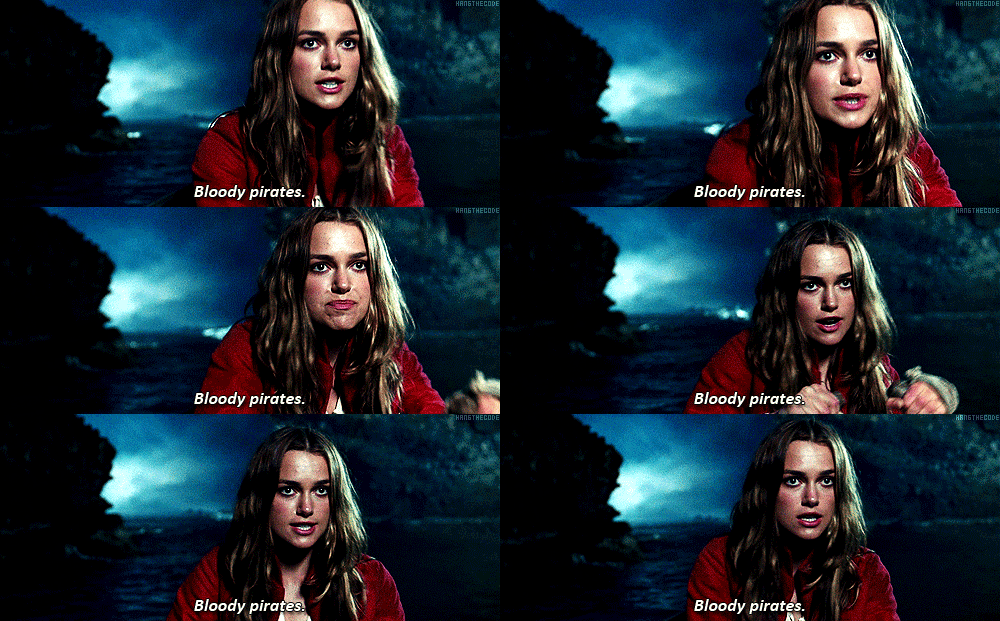
Elizabeth who improvised a weapon when pirates invaded her bedroom
Elizabeth who could have run for the exits but instead went straight for the swords
Elizabeth who demanded to speak with a pirate captain and then used the leverage she had to get him to agree to her demands
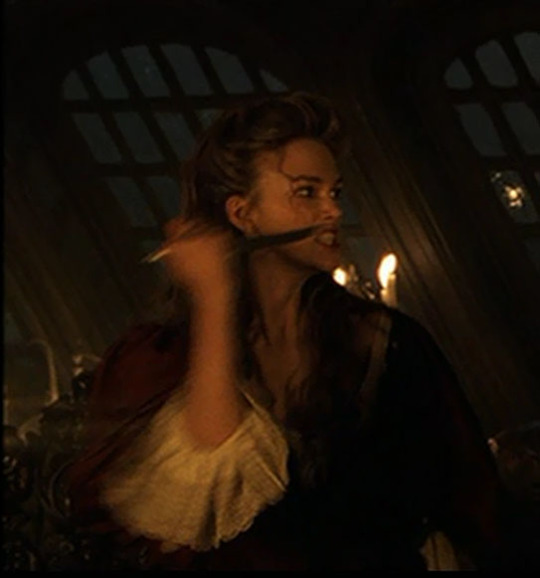
Elizabeth who CAME AT BARBOSSA WITH A GODDAMN KNIFE and then fucking STABBED HIM when she couldn’t get away
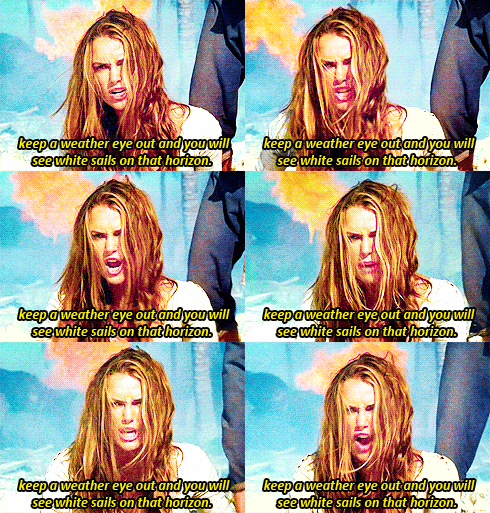
Elizabeth who was trapped on a tiny island with nothing but crates of rum and a man she couldn’t stand and who used those supplies to summon a rescue party for herself
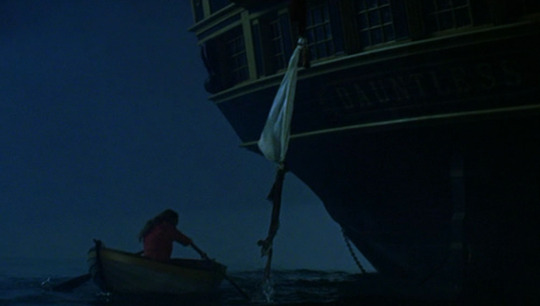
Elizabeth who made a rope out of sheets and climbed down the back of a ship to save the day herself when no one would listen to her about how dangerous the pirates were
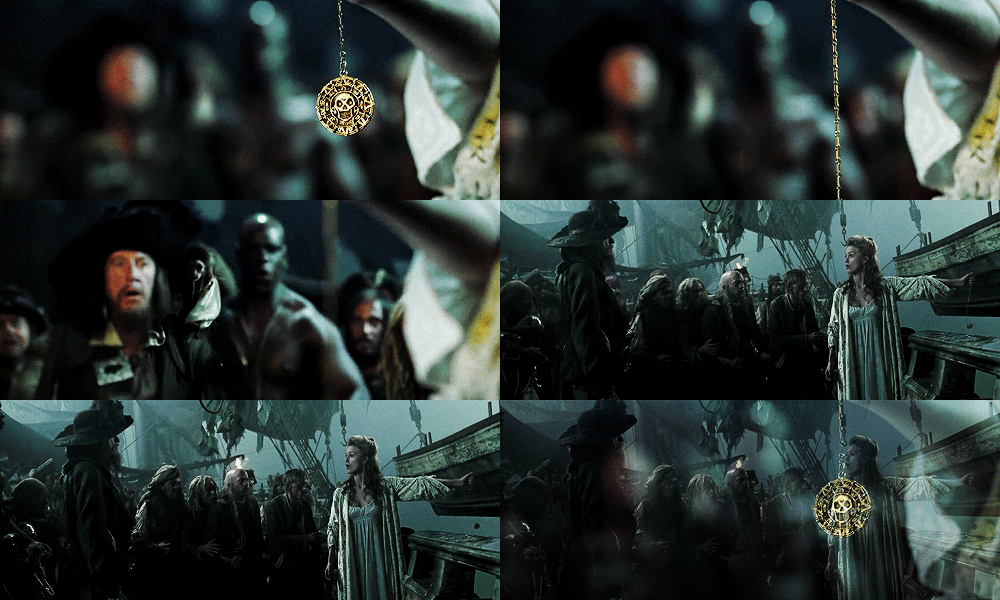
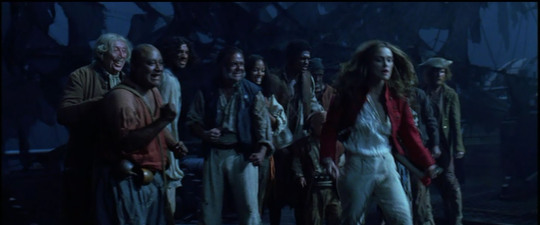
Elizabeth who snuck onto the Black Pearl, knocked two cursed pirates straight off their ship, and rescued Jack’s entire crew
Elizabeth who rowed straight back into danger without any backup instead of running away with everyone else
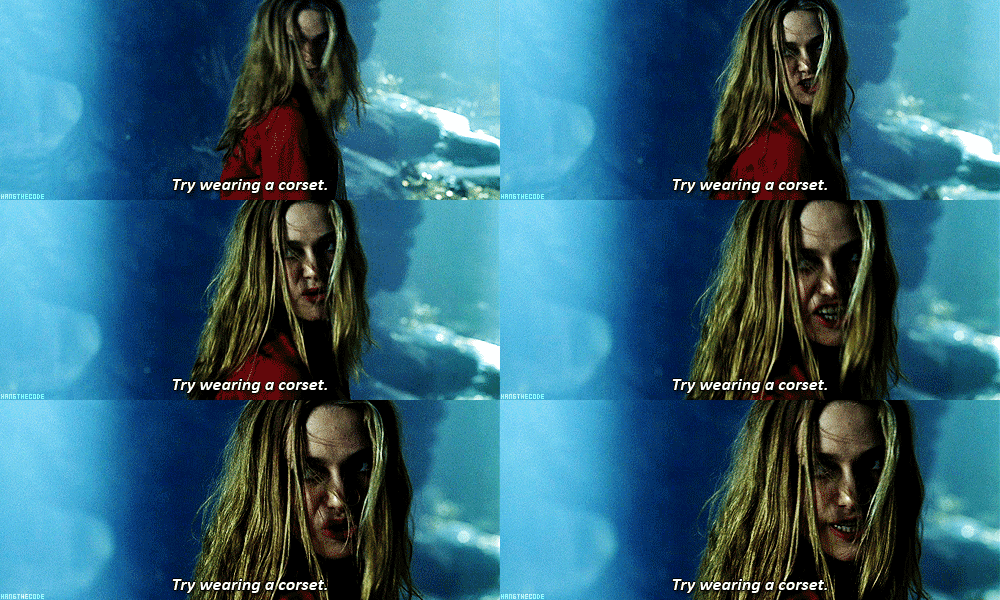
Elizabeth who came to Will’s rescue with a blunt object and a one-liner
Elizabeth who proceeded to team up with Will to take down all the remaining pirates in the cave
Elizabeth who – without being asked or told what was going on – faked unconsciousness to create a distraction for Will’s rescue of Jack
Elizabeth who stepped in front of a ring of muskets, successfully protecting Jack and Will from being shot or captured
Elizabeth may have learned some impressive sword tricks in the later movies, but she was a Badass from day one.
I think it’s about time to explain why Stanford Pines is my favorite Gravity Falls character. I’ve reblogged whatever good meta I could find on him in the past, but none really got at my main thoughts: the best part of the show is its rich subtext about the realities that kids’ shows don’t acknowledge directly, both terrible and beautiful, and this character encapsulates that perfectly.
Let’s backtrack: Gravity Falls is a kids’ show that adults appreciate for audacious humor (and horror), emotional moments, character building, and foreshadowing that fully utilizes the Law of Conservation of Detail. It brings many of us back to childhood -from idyllic blue sky to irreverent laughter, with just a fleeting glimpse of the truly marvelous. We can catch that glimpse in the cryptograms, mystery aesthetics, color scheme, musical score, backgrounds…
…and Ford, the subject of this post. This character started as a bombshell reveal that made us reevaluate everything, quickly established himself as adorkable, badass, and morally complex… that’s pretty nifty, I would say, but I’ve established he’s also my favorite for reasons more extra than those. So here’s my unsanctioned, unsanitized, unmutilated opinion on why this character is resonant and cathartic to me, personally. Read it or don’t.
Fantasy elements don’t deter thinking viewers from connecting with stories; we either unveil essentially true-to-life stories underneath or admit the story suffers from a lack of substance. So I cannot overstate that, circumstances aside, Ford presents a more realistic (and visceral, and played-straight) depiction of trauma than I ever expected to see from a kids’ show.
Ford spirals across the course of his arc. It starts with others calling him a freak in childhood because of his polydactyly, and that wound opens all the rest as he develops a dangerously low self-esteem contingent on intellectual feats. The narrative links his ambition to his earliest insecurity at every turn: Stanley juxtaposing Ford’s polydactyly and intelligence as two anomalies about him, Bill Cipher taunting Ford about both, and Ford hiding his hands at key moments. That’s why he makes a deal with Bill, really a demon exploiting him -because he sees no other way to prove the world wrong about his basic humanity.
Bill’s abuse of Ford gives an unexpected psychological edge to an otherwise comedic villain. Putting the “con” in “Panopticon”, Bill traps Ford in a nightmare from which he cannot awaken… and it hurts. We never see Ford’s escape from Bill’s world because he never left, per visible fractures in his psyche’s thin ice: insomnia, paranoia, anger, sense of foreshortened future, a mind of equal parts shame and guilt over things that weren’t his fault, self-destruction, and of course, trusting no one. And I mean, shit. That’s what trauma does. It doesn’t just magically go away as in stories where fantasy elements don’t code for anything real. The journals, “A Tale of Two Stans”, and “The Last Mabelcorn” together epitomize how this show’s details acquire nuance in retrospect.
Ford’s fixation on his journals, already symbols of himself, acquires nuance in retrospect. To Ford, the journals represent his own tenuous sense of self-worth -so of course he clings to them against the negation of self that demon possession represents. Those pages hide the vulnerability just as he does, but were probably the only thing grounding him in the reality that he owns this experience, he legitimately suffered degradation, and he will not let anyone erase that (read: him) without a fight. Given how his encrypted emotional rawness disrupts a show that otherwise keeps its drama safe and restrained emotionally, he succeeded. Ford becomes the journal becomes the dangerous and marvelous allure of mystery, a psychic echo of both the spiritual violation of the man and the inviolate perseverance that kept his spirit alive.
Ford’s arc also unveils something the show’s truisms about family cannot, namely everything wrong with the idea of familial obligation. Y’know, the idea that family members “owe” each other more than basic decency, so coercive indebtedness rather than freely-given, unselfish love keeps the relationship afloat? People reject this entitlement complex in other kinds of relationships, but think it sacrosanct in families. Especially those with gifted kids.
This show might have fallen down that bottomless pit if not for the Stans’ backstory: their father valued Ford only as “our ticket out of this dump” and abandoned Stan for interfering with that. Like many siblings from bad homes, the two shared milder shades of the parent’s mentality: Ford writing off Stan as badly-intentioned, and Stan assuming Ford owes him. So Ford had every right to not thank Stan for unsolicited favors -just not to conclude, as he did, that Stan only cared about him for his supposed debt. It’s vital they don’t reconcile until Stan does something without expecting thanks, so the ending isn’t some banality about Ford accepting he ~really did~ owe his brother uwu; it’s Stan giving up that way of thinking, Ford giving up the distrust that made him see everything in extremes, and both moving toward a healthy understanding of family.
The matter of Ford’s past makes it so important he respects boundaries (“he doesn’t make fun of me all the time the way you and Grunkle Stan do”). Like I said, shows like this usually say that family gets to nullify personal boundaries. Ford confounds that with a key element of healthy relationships: never denying the validity of anyone’s feelings. He never crosses this line as Stan does during their fight (albeit still crossing others); more positively, he validates Dipper’s interests and reassures Mabel she’s a good person and treats Fiddleford with dignity when they needed it most. Ford did far more good than harm, in areas where no one else could, that’s for damn sure. All because he’ll never replicate the horrific boundary violations he endured. Trauma didn’t make him this way, but that he acted this way in the face of it shows truly admirable integrity.
Ford is a good person because even without trust, he has intrinsic respect for others’ dignity. We see child!Ford would rather “fit in” than truly be normal because from the first, he has that crazy dream of people deserving fundamental respect (never deserving the violence of alienation) without exception. That’s why he doesn’t mock people, and why he reclaims the study of anomalies and himself with it. We see in the journals’ hand-symbol the same repressed light of self-preservation as lets him reconnect, overpowering his unfounded fears that he only hurts people and deserves none of their help. And Ford takes that study of anomalies with him to the end, never forfeiting his true self. So the show takes its affinity for weirdness beyond lip service, as it had with mystery and family, by showing that (neurodivergent-coded) Others deserve acceptance as they are.
Have I read too deeply into what I introduced at the beginning as an ultimately lighthearted kids’ show? Yes. Definitely. Absolutely. But when it’s a show all about detail and mystery, you can’t give me a surface and expect me not to look under it. Seeing sublime new dimensions to things makes growing up worthwhile, and that’s why Stanford Pines is my favorite Gravity Falls character.
One overlooked thing that really sets the Lord of the Rings films apart from other franchises is how earnest they are-
Most movies are so afraid of being “cheesy” that whenever they say something like “friendship is the most powerful force in the world” they quickly undercut it with a joke to show We Don’t Really Believe That! 😉 Even Disney films nowadays have the characters mock their own movie’s tropes (”if you start singing, I’m gonna throw up!”) It’s like winking at the camera: “See, audience? We know this is ridiculous! We’re in on the joke!”
But Lord of the Rings is just 12.5 hours of friendship and love being the most powerful forces in the world, played straight. Characters have conversations about how much their home and family and friends mean to them, how hope is eternal, how there is so much in the world that’s worth living for…. and the film doesn’t apologize for that. There’s no winking at the audience about How Cheesy and Silly All This Is; it’s just. Completely in earnest.
And when Lord of the Rings does “lean on the fourth wall” to talk about storytelling within the film, it’s never to make jokes about How Ridiculous These Storytelling Tropes are (the way most films do)…. but instead to talk about how valuable these stories can be. Like Sam’s Speech at the end of the Two Towers: the greatest stories are ones that give you something to believe in, give you hope, that help you see there are things in a bleak violent world that are worth living for
Earnestness is so much cooler than all the hip cynicism in the world. You go LOTR




 XI's Archived Tumblr Blog