I introduced a friend to ATLA a few nights ago, and they had only
known two things about the entire show: the cabbage meme, and that Aang
apparently wants to ride every large and dangerous animal he can
possibly find. We got through the first five or so episodes, and my
friend noted that Aang is exactly what a 12-year-old would be like if
given godlike powers, and that this is literally just what he
could do with airbending. He can’t even wield any of the other elements,
and he’s one of the most powerful people on the planet, because he’s an
airbender.
And that got me thinking.
This snippet from Bitter Work is one of the few pieces of concrete information we get about the airbenders, at least in ATLA. Iroh is explaining to Zuko how all four of the elements connect to the world and to each other.
Fire is the element of power, of desire and will, of ambition and the ability to see it through. Power is crucial to the world; without it, there’s no drive, no momentum, no push. But fire can easily grow out of control and become dangerous; it can become unpredictable, unless it is nurtured and watched and structured.
Earth is the element of substance, persistence, and enduring. Earth is strong, consistent, and blunt. It can construct things with a sense of permanence; a house, a town, a walled city. But earth is also stubborn; it’s liable to get stuck, dig in, and stay put even when it’s best to move on.
Water is the element of change, of adaptation, of movement. Water is incredibly powerful both as a liquid and a solid; it will flow and redirect. But it also will change, even when you don’t want it to; ice will melt, liquid will evaporate. A life dedicated to change necessarily involves constant movement, never putting down roots, never letting yourself become too comfortable.
We see only a few flashbacks to Aang’s life in the temples, and we get a sense of who he was and what kind of upbringing he had.
This is a preteen with the power to fucking fly. He’s got no fear of falling, and a much reduced fear of death. There’s a reason why the sages avoid telling the new avatar their status until they turn sixteen; could you imagine a firebender, at twelve years old, learning that they were going to be the most powerful person in the whole world? Depending on that child, that could go so badly.
But the thing about Aang, and the thing about the Air Nomads, is that they were part of the world too. They contributed to the balance, and then they were all but wiped out by Sozin. What was lost, there? Was it freedom? Yes, but I think there’s something else too, and it’s just yet another piece of the utter brilliance of the worldbuilding of ATLA.
To recap: we have power to push us forward; we have stability to keep us strong; we have change to keep us moving.
And then we have this guy.
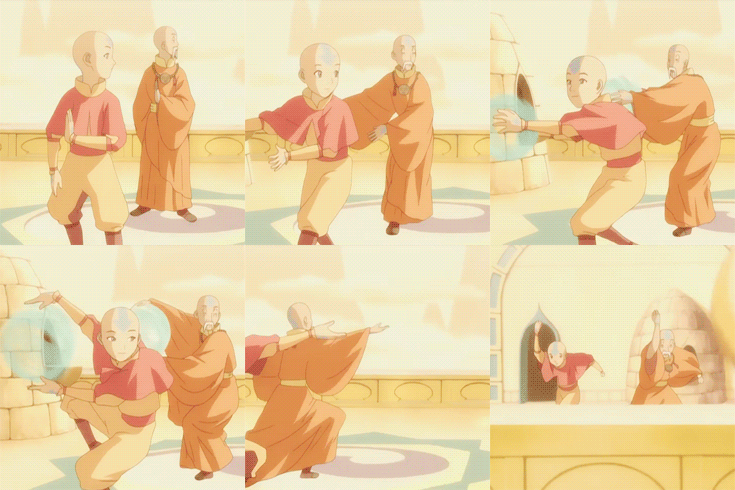
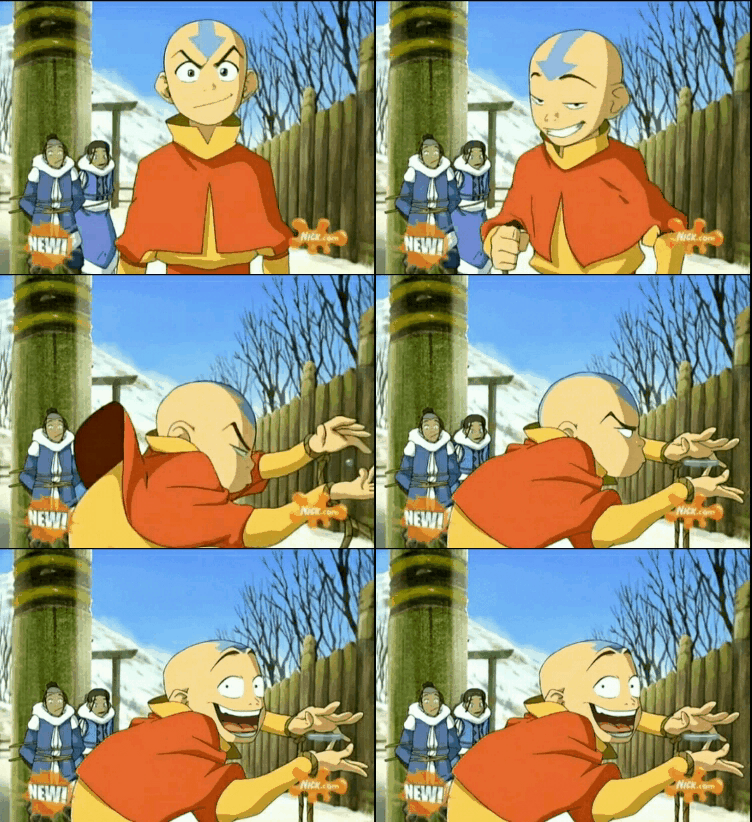
The air nomads brought fun to the world. They brought a very literal sense of lightheartedness.
Sozin saw this as a weakness. I think a lot of the world did, in ATLA. Why do the Air Nomads bother, right? They’re just up there in their temples, playing games, baking pies in order to throw them as a gag. As Iroh said above, they had pretty great senses of humour, and they didn’t take themselves too seriously.
But that’s a huge part of having a world of balance and peace.
It’s not just about power, or might, or the ability to adapt. You can have all of those, but you also need fun. You need the ability to be vulnerable, to have no ambitions beyond just having a good day. You need to be able to embrace silliness, to nurture play, to have that space where a very specific kind of emotional growth can occur. Fun makes a hard life a little easier. Fun makes your own mortality a little less frightening to grasp. Fun is the spaces in between, that can’t be measured by money or military might. Fun is what nurtures imagination, allows you to see a situation in a whole new light, to find new solutions to problems previously considered impossible.
Fun is what makes a stranger into a friend, rather than an enemy.
((Portal fans: Wheatley was good and then all of a sudden he went bad. He was possibly bad from the very beginning and was actively seeking power by controlling the player from the very beginning.
Me, an intellectual: Wheatley going bad is the result of him failing to address various personal issues and insecurities in his life and refusing to seek any guidance or help from those around him. He thought that others would see his problems as being too ‘tiny and insignificant’ to be worth talking about, so instead of seeking help, he just kept bottling up his emotions and letting it fester in the hopes that the feeling would just go away. You can see this in the final boss battle when he sobsabout Chell not catching him– a grievance that he has kept bottled up ever since the start of the game and that he has since only decided to bring up at the very end of the game during which he is having an emotional meltdown. Wheatley choosing to suppress his own emotions instead of addressing his underlying personal issues and feelings of unimportance are what lead him to engaging in unhealthy coping mechanisms, the robotic equivalent of substance abuse, aggressive behavior, and pushing away the only person he’s ever viewed as a friend. Wheatley is not the story of some power hungry moron who suddenly went bad. Wheatley is a cautionary tale about how you shouldn’t be afraid to seek help in confronting your issues and the dangers of turning to unhealthy coping mechanisms and possibly even substance abuse as a form of release.))
Pippin: finally i’m getting the respect i deserve from these peasants
so accurate i am choking on my carrot. this is making me giggle harder than it should. I love Pippin so much.
I don’t think there will come time when I’m not reblogging this. Sorry guys.
no no no you guys don’t understand, Pippin is someone really important in the Shire! The books don’t talk about it a lot, and the movies won’t touch that stuff with a bargepole, but Pippin will be inheriting land rights to about a quarter of the Shire. He’s second in line to becoming military leader of all Hobbits. His dad is currently in charge of that stuff, but he’s completely aware of it, and educated for it, and that’s why he’s such an over privileged little shit in the books.
I thought it was a shame the movies didn’t talk about class differences in the Shire. Also puts M&P stealing food in an uglier light.
To be fair, at the time of the Party, Pippin would have been 12, which puts it back into a more acceptable light. And they’re stealing food from Bilbo, a wealthy and eccentric family member, which again makes things a bit different.
But yes, when they call Pippin Ernil i Perrianath – Prince of the Halflings – they are actually completely spot on.
And when Pippin tells Bergil “my father farms the land around Tuckborough” he’s deliberately downplaying his class so that he can greet the boy as an equal rather than a superior. It’s Pippin’s most adult moment in the series. Bergil is engaging in a status contest which Pippin can totally win – but instead chooses not to compete. Pippin is a gilded and spoiled lordling in the Shire, but he becomes a Man of Gondor.
Yeah, to add a bit of unnecessary trivia/level of preciseness, Frodo is the oldest of the four; he was born in 2968, was (obviously) 33 at the time of the Party, and so he’s 51 here. Sam’s second-oldest; born in 2980, he was 21 when Bilbo left and is 39 at this point. Merry’s two years younger than Sam, making him 18 or 19 in 3001, when the Party took place, and Pippin was born in 2990, so he was actually 10 or 11 during the Party, and during this scene they’re ~37 and ~29, respectively.
So yeah, Pippin’s the youngest by a lot. Plus, taking hobbit aging into account, he really is still in the equivalent of his teens; remember the Party was half to celebrate Frodo’s coming-of-age at 33, and Pippin’s around twenty years younger than Frodo.
This fucked me up. I didn’t read the books and in the movie it was shown like Frodo took off with the ring like 2 days after Bilbo’s gone away, but it was 17 years after that. OMFG.
Also worth noting that “Merry and Pippin stealing food” isn’t in the book – raiding Farmer Maggot’s fields, specifically the mushrooms, is something Frodo used to do when he was a kid, before his parents died and he moved to Hobbiton to live with Bilbo. Frodo’s still afraid of Maggot’s guard dogs, but the farmer himself is sympathetic and helpful when he finds Frodo & Co. cutting through his field.
And this is specifically invoked in the books at the Council of Elrond, where Elrond argues against Pippin in particular going, because he is so young. He’s okay with Merry going but wants to keep Pippin in Rivendell. Elrond has serious misgivings against sending an early-teenager off to face the Shadow, and given what happens to Pippin in The Two Towers, he was not wrong.
Merry is also a prince of sorts – his father is Master of Buckland, which is the semi-autonomous boundary community between the Brandywine river and the Old Forest (never, alas, discussed in the movies). Merry and Pippin are friends in the books in part because they’re of relatively equal status and in part because they’re cousins (like all nobs, Shire nobs mostly marry each other).
However, the books also clearly make Merry the Responsible One, even though he’s only been a full adult for four years. (Think early 20s in human terms.) Merry buys and prepares the house at Crickhollow. Merry figures out the secret of the ring before Bilbo even gives it to Frodo, but Merry keeps Bilbo’s secret. Merry convinces Sam to spy on Frodo. Merry explains that they’re all joining Frodo on the Quest, whether Frodo wants them to or not. Merry cautions about the Old Forest and doesn’t go down to drink in the taproom at the Prancing Pony.
So in the books, Merry isn’t Pippin’s partner in pranks – instead, Merry and Pippin spend all their time together on the Quest because Merry’s looking after his younger cousin. Can you imagine what his mother would say if he came home without Pippin? Merry can, and that’s why he takes some pretty absurd personal risks during the books to make sure that doesn’t happen. Like, he literally rides into battle on the back of someone else’s horse, in disguise, because Pippin is probably somewhere in that battle.
Merry is 99%* common sense unless Pippin is involved, and then he is 100% save/rescue/protect/support Pippin. The character growth and maturation we see in Merry in the movies isn’t in the books; instead he has almost the exact opposite arc of becoming an extreme risk-taker, driven by his protective instincts.
(*The other 1% stabbed a ringwraith in the calf that one time, but we can argue that this was due to a natural expansion of Merry’s protective instincts toward Eowyn, with whom he’d bonded quite a lot recently, and toward Theoden, who he deeply respected as being kind of like his dad.)
bonus kleenex moment:
when pippin finds merry stumbling half-blind and sick through the streets of Minas Tirith after killing the Ringwraith, he tells Merry “Poor old fellow! I’ll look after you,” half-carries him to the healing halls, and is worried sick about him until he can finally get Aragorn in to give him medicine.
It’s the first time in the story that Pippin has looked after Merry, instead of the other way around.
It shows that Pippin has grown up, that he can protect the people who always protected him.
This is also why it’s awesome when they finally come back to the Shire, and Saruman’s made a right mess of things, and it’s Merry and Pippin that kick ass and take names. They’re the closest things the Shire has to princes and military leaders, and they’ve just had adventures that make this look like a minor action. Frodo’s tired, and Sam’s just worried about Frodo, and Merry and Pippin are like hold my pint, I got this.
This might be the most compelling evidence yet that the girl in the green dress is actually Woo Kyung herself. Not just in the implication of Ji Heon’s words, but in the composition of the first shots. Woo Kyung’s reflection looks like her ghost looking back at her, mirroring the little girl’s gaze. A delusion surfacing from somewhere deep in Woo Kyung’s subconscious, a buried trauma, urging her to save abused and mistreated children. Because she was one of them.
I don’t know for sure if that’s what’s going on, but Woo Kyung has clearly suffered some kind of abuse in the past. Possibly at the hands of her stepmother. That woman is cruel, hold and emotionally withholding toward her. And Woo Kyung consistently tries to pacify and please her, while also being terrified of her hanger. Her reaction to her stepmother is as strange as it is disturbing.
If what’s happening isn’t supernatural, but rather a manifestation of Woo Kyung’s intuition, then her delusion might very well be repressed memories surfacing.
Mineta has the best quirk for hero work, esspecially in a team setting
Here Me out
villian incapasitation
using his gape attacks he can set traps for enemies that can be fallen into by a fleeing enemy,used to disarm/incapasitate enemies and have them stick to something should it get on them, and distract an enemy while fighting another hero
recue ops
weather its a building with a unstable foundation or attaching it to a rope to stick to the side of something so you KNOW you can have people climb it without it falling, or making a make shift floaty becouse apparently these balls float and this are good for ship patching and making it harder for people to drown, this quirks great for rescue operations
stealth/villian hideout raids
I mentioned before about him sticking one to rope or chain in order to make a ladder right? villian hide out raids where he sneaks into the enemies base, potentially stick his balls onto the camera lenses in the building if the situation called for it, lock doors with villians inside it by sealing the door, giving a few minutes before trying to break the door down, and a host of other shit like that
also might be useful as an emergency wound closer, if your desperate. stick grape ball on cound then on the other side stick some rubble or a large book and tell the patient to hold it, probably would have medics giving him shit but hey buy a few hours while working
I hate to say it but, there is some potential there
Since childhood, Ariel has been among my favorite Disney princesses. I connect with her deeply – and whenever someone (like Keira Knightley recently) brings up the old line that she is a ‘bad role model’ for young girls because she ‘gives up her voice for a man,’ my heart breaks.
That reading of Ariel’s character is reductive and inaccurate.
Everyone always mentions that Ariel was interested in the human world before meeting Eric, but not as many people point out how radical that makes her in the context of her own society.
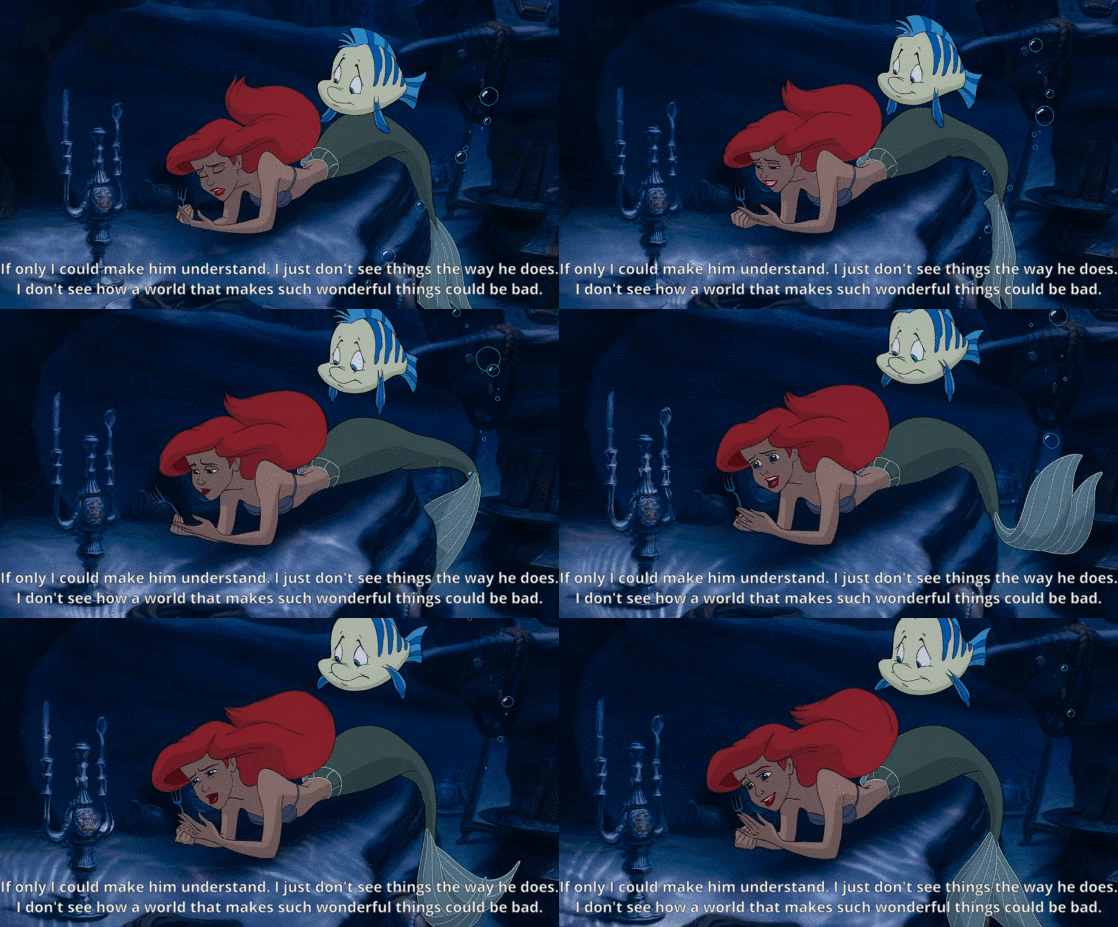
Ariel lives in a society that is xenophobic towards humans, Triton at various points calls them “barbarians,” “savage,” and “incapable of any real feeling.” She lives in a society that constantly tells her that her interest in the human world is wrong and bad, something she struggles with at the start of Part of Your World:
By seeking a fuller understanding of the human world, Ariel actively challenges her father’s xenophobia, thinking for herself instead of accepting her society’s fears and prejudices.
The film goes out of its way to establish Ariel as an outsider within her own society. Think for a moment about the opening lines of Part of Your World:
Look at this stuff. Isn’t it neat? Wouldn’t you think my collection’s complete? Wouldn’t you think I’m the girl The girl who has everything? Look at this trove, Treasures untold How many wonders can one cavern hold? Lookin’ around here you’d think Sure, she’s got everything…
People who criticize Ariel so often mis-characterize her as simply a spoiled teenager. The very statement, “She gave up her voice for a man!” implies she’s a foolish girl who throws her life and agency away in a fit of pique.
Yet, the opening of Part of Your Worldanticipates that certain members of the audience will have a superficial understanding of Ariel’s pain and directly addresses that. On a superficial level, Ariel does seem like “the girl who has everything.” She is the daughter of the most important merman in Atlantica, she has countless treasures hidden away in her grotto…
But that’s the thing, you see. They’re hidden in her grotto. Ariel may be the daughter of the sea-king, but the sea-king hates and fears humanity. Part of Your World is the most heartbreaking rebuttal to anyone who sees Ariel as a shallow teenager because it shows how alone she truly is. Except for Flounder, she has no one under the sea she can genuinely confide in. (She confides in Sebastian, of course, but he was sent by her father to spy on her and he does betray her trust
– by mistake, but he does). Her sisters and the rest of Atlantica presumably do not question the prejudices that cause the human world to be forbidden to the sea folk.
Ariel is an outcast, forced to hide who she is from the people who should love her unconditionally.
The more Part of Your World goes on, the more devastating and resonant Ariel’s collection of artifacts becomes.
These artifacts represent a void in her life and, at the same time, are the only means she has of filling that void.
She longs to have knowledge, but her society imposes ignorance on her. She longs to see the human world herself, to ask questions and finally be answered – but it is all denied her. The imposed ignorance forces her to live vicariously through the artifacts she collects.
She cannot see a couple dancing, so she must content herself with a music box.
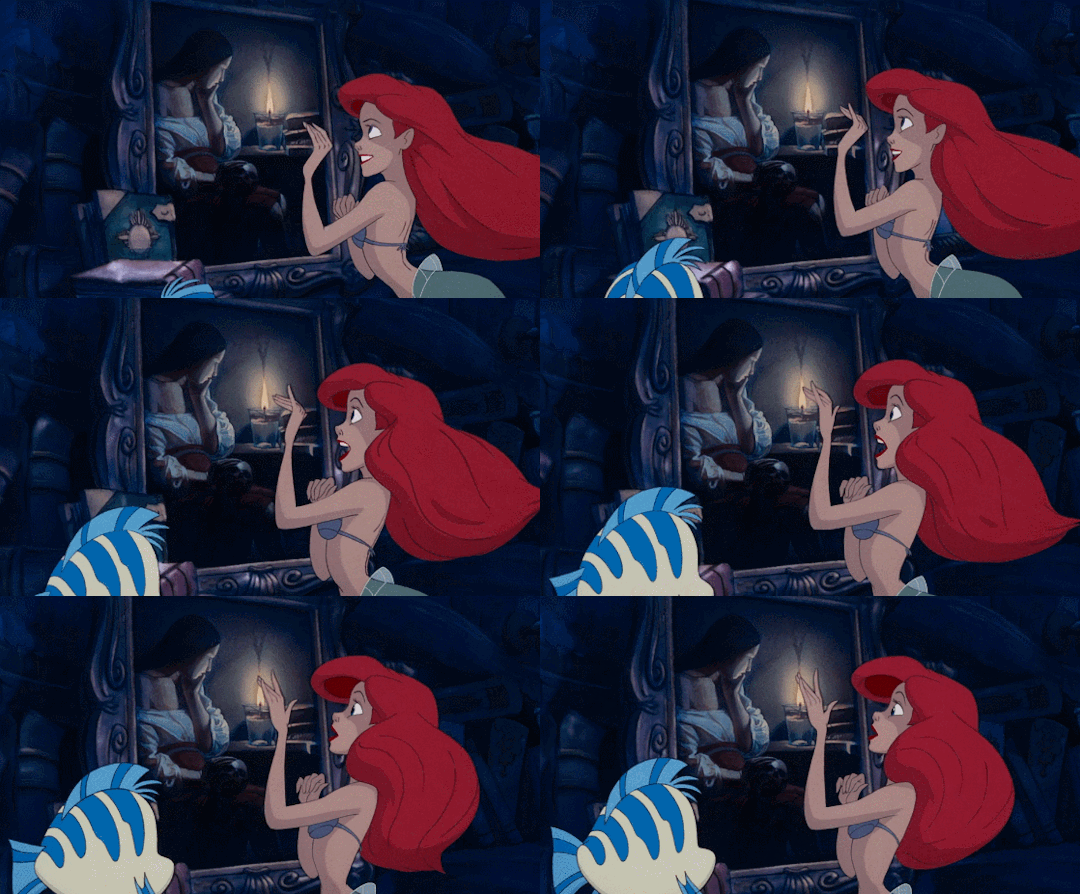
She can only experience the shadow of fire on oil and canvas.
Her collection perpetually reminds her that there is a world beyond her reach. At the same time, it is her central way of interacting with that world. Yes, she can go up to to the surface and talk to Scuttle, but her collection is something so much more personal. These are items she saved from the ruins of ships, sometimes at the risk of her own life… so she could study them, learn from them, and lament the unjust rules of her society that prevent her from learning more…
Her courage, her curiosity, her thirst for knowledge are all bound up in these precious possessions.
And yes, they are objects. Yes, she wants more than a collection of objects. But this collection is all she has. And, as far as Ariel knows, it is all she will ever have…
When you’re all but alone in the world and you have only meager scraps to cling to, those scraps mean the world to you.
And, I remind you, Ariel cannot even openly enjoy her collection of scraps, the shadows of a world she cannot touch. She has to hide even them, guard them, keep them secret.
Ariel’s grotto is a place of solace and security where she can be herself without fear of judgment.
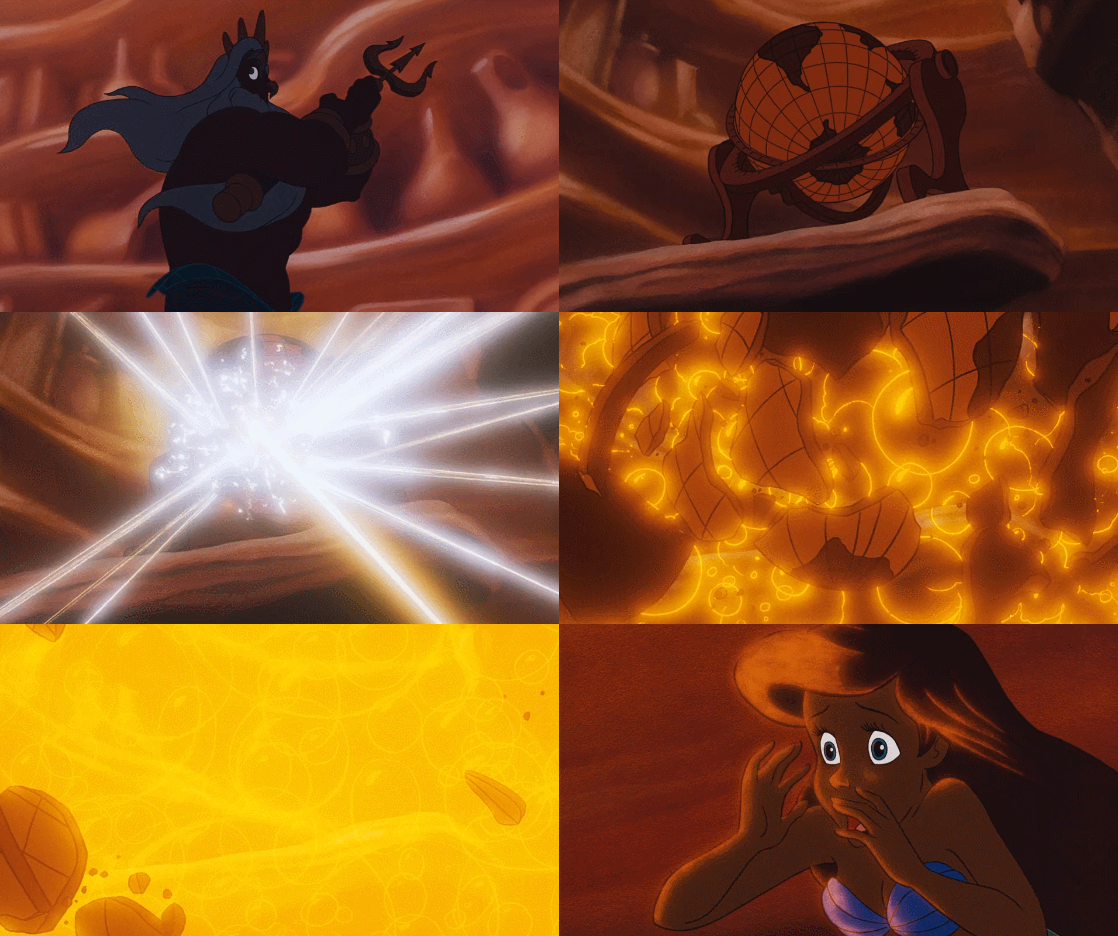
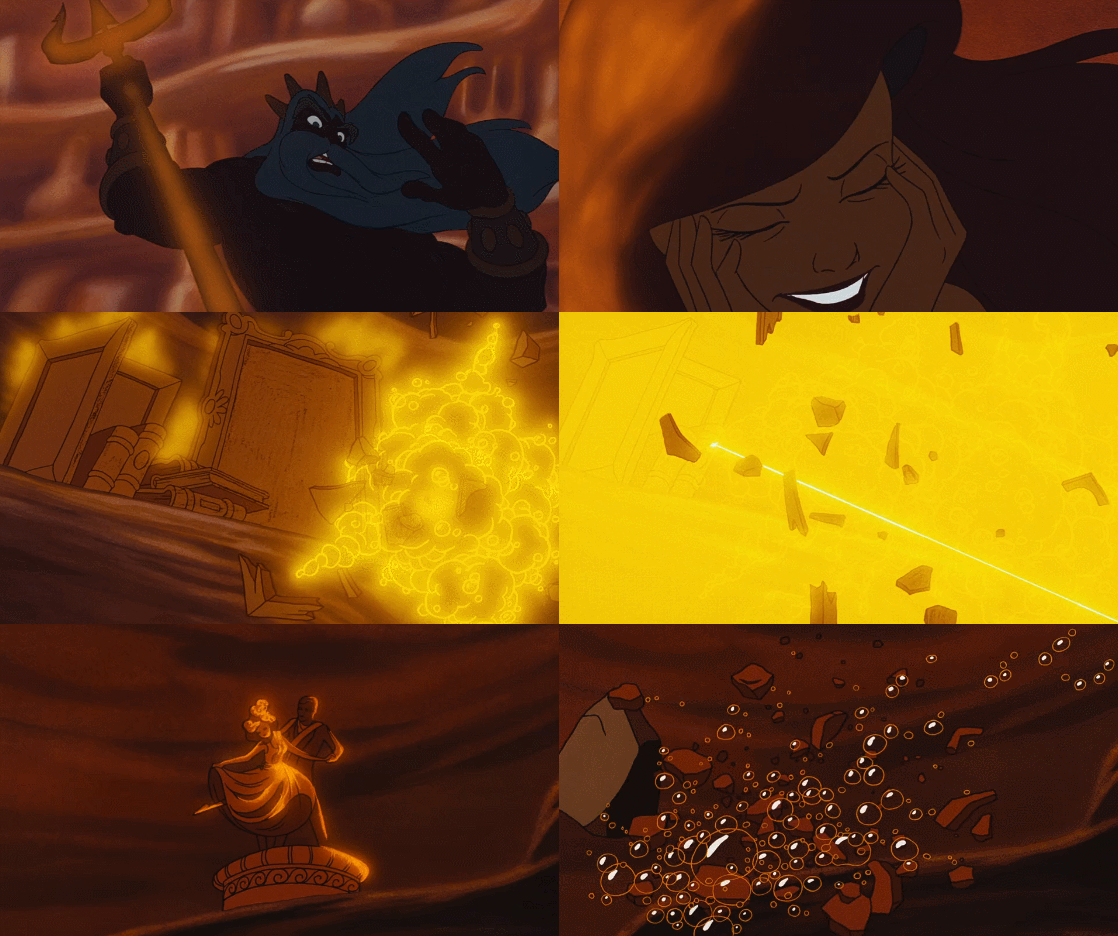
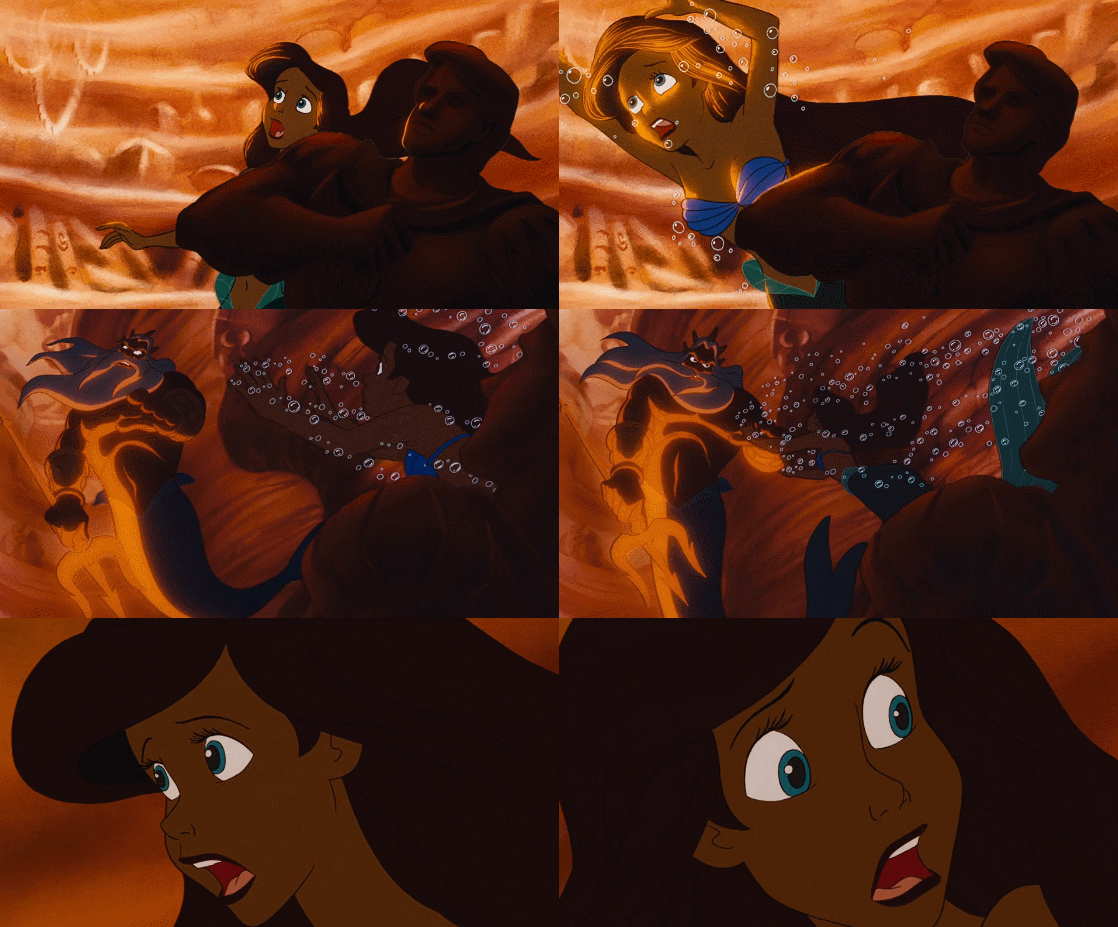
There is a reason the destruction of Ariel’s grotto harrowed me more as a child than any other scene in a Disney film. I could hardly watch it. I hid my face. I begged my family to skip scene. I was reduced to a sobbing mess. On a personal level, it harrowed me more than the destruction of Cinderella’s dress.
That reason is because, in watching the scene, I felt the pain of a place of refuge being invaded.
By the time we reach the destruction of the grotto, we are as emotionally invested in Ariel’s collection as she is because we see that the objects are more than objects. They are extensions of herself, encapsulating all her feelings of hope and hopelessness.
Destroying those items is like annihilating a part of her soul.
That is why I hate the “she gave up her voice for a man” line of thought so much. Because it so blatantly disregards the context of the film. Because it paints Ariel as a shallow teenager. Because it places blame for what follows solely on Ariel’s shoulders and absolves Triton of any wrongdoing.
I want to tread carefully here because, like Ariel, Triton is a nuanced and complex character. He has good intentions and cares about his youngest daughter.
Yet, even a well-intentioned individual can be in the wrong. Even an individual who is right about certain things (Ariel is indeed impetuous and reckless at times – though I hope my analysis reminds readers that those are not her sole character traits), can be wrong about other things.
And Triton’s confrontation with Ariel highlights his failings and his faults.
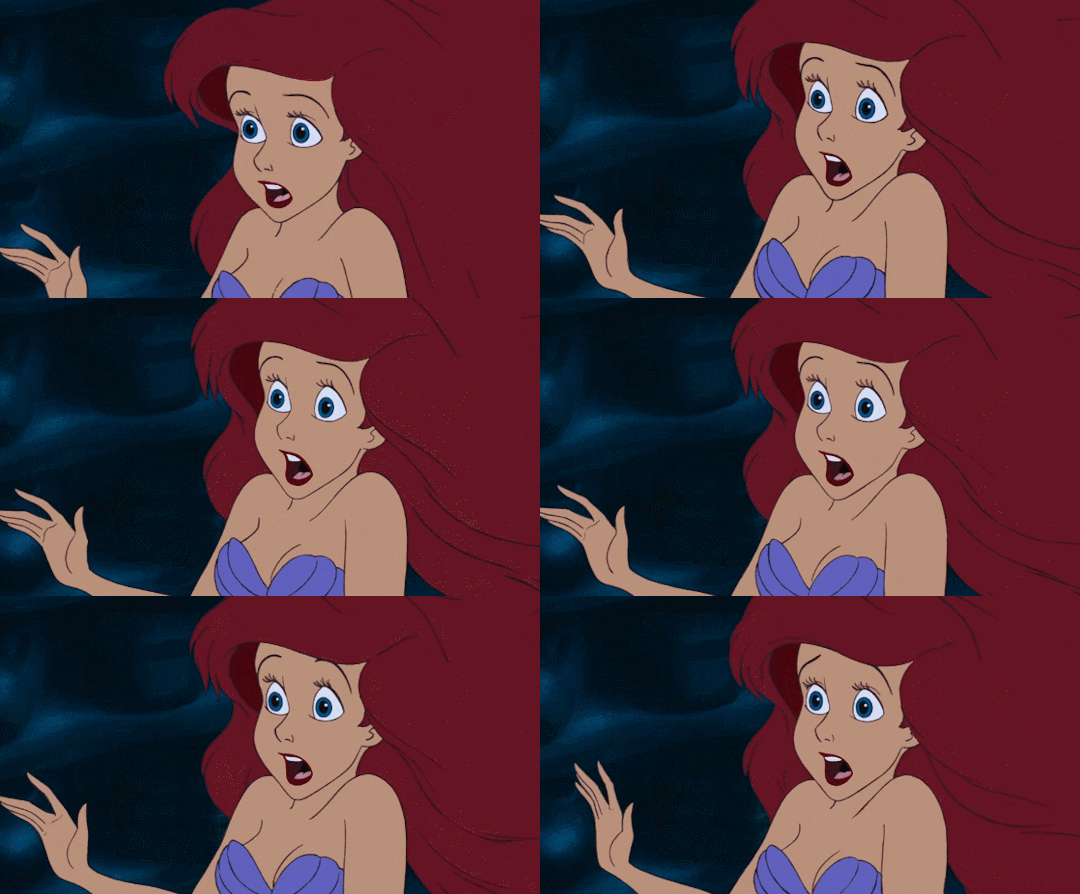
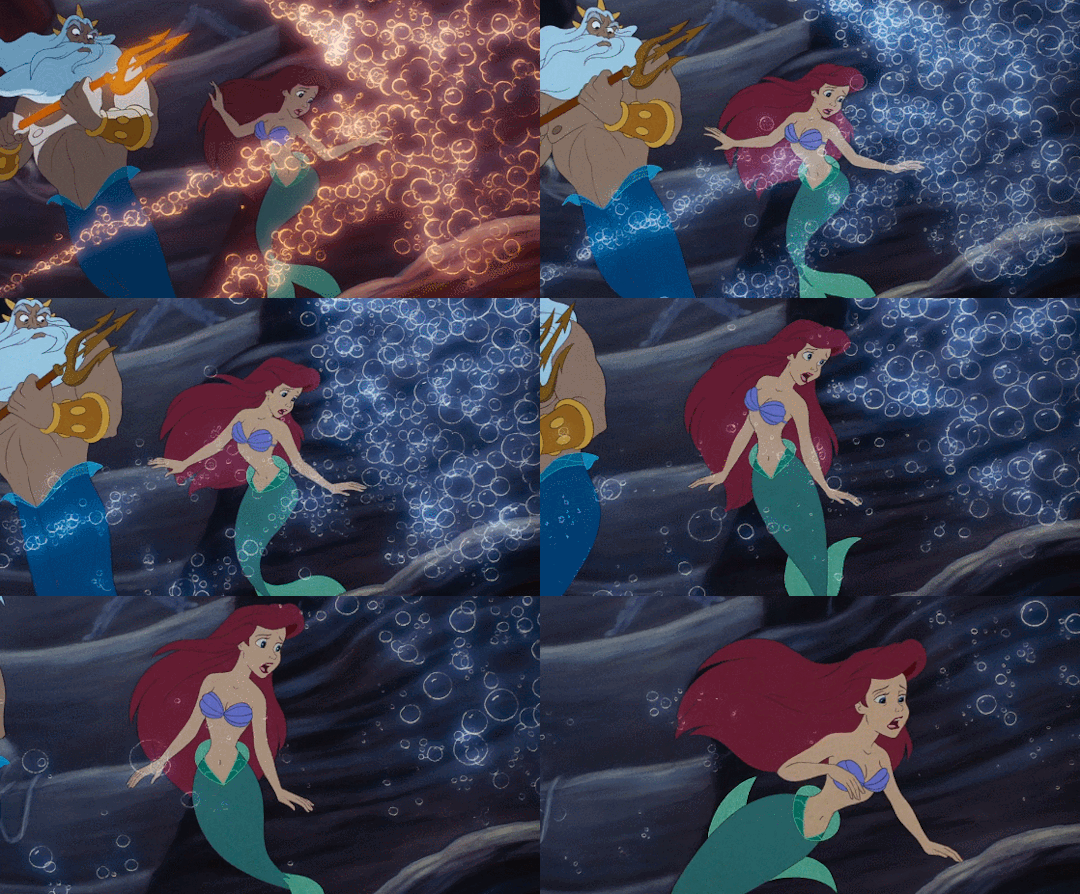
Look at Ariel’s face when she first sees her father in the grotto:
The enhancement of expression in animation allows the audience to clearly see the fear in her face.
Triton has created an environment where his own daughter is afraid of him.
No parent should do that to their child.
Confronting Ariel, Triton says, “I consider myself a reasonable merman. I set certain rules and I expect those rules to be obeyed.”
On one level, Triton is right to expect his children to respect the rules he sets in place.
What I feel Triton misses, however, is that respect is not the same as intimidation.
Since Triton wants Ariel to accept his rules based solely on his authority as her father, he makes it impossible for there to be any communication between himself and his daughter.
This dynamic means that he will not listen to Ariel even when Ariel is in the right and he is not. Children should listen to their parents, but in the same way, parents should listen to their children.
Triton may be in the right to worry about his daughter’s safety, but his fear is still born of bigotry – bigotry that Ariel recognizes and rejects.
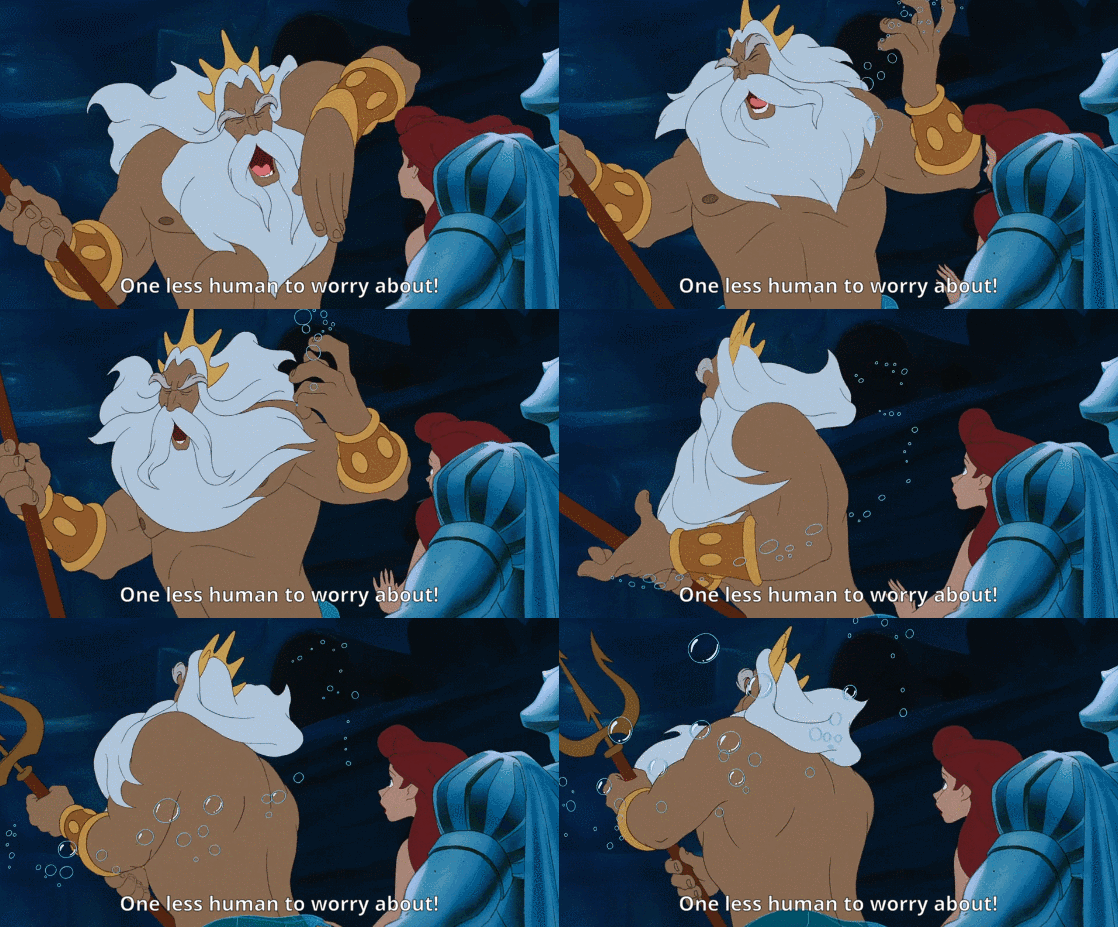
Triton, after all, grows angry at his daughter because she wouldn’t let another living being die. He specifically calls her out because she “rescued a human from drowning.”When Ariel counters that allowing someone helpless to miserably drown is cruel, he shuts her down with:
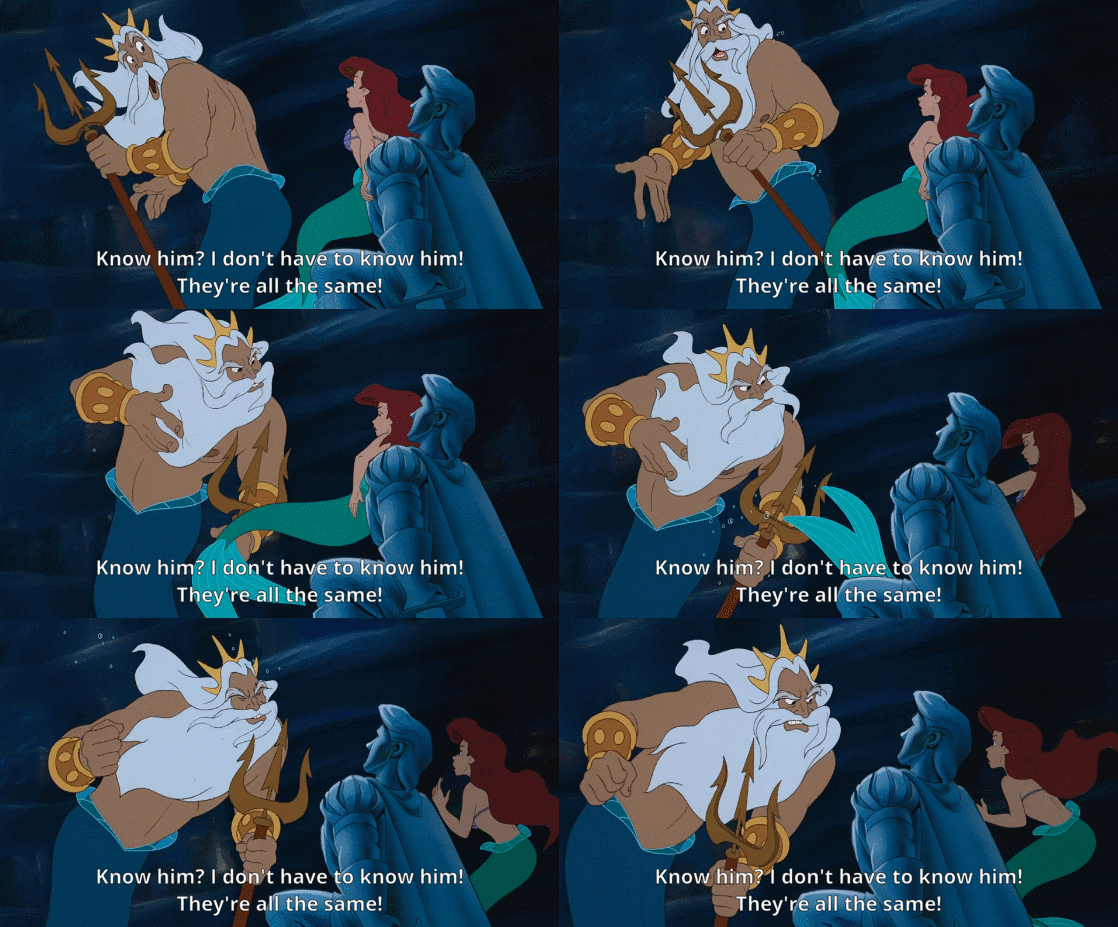
When Ariel points out the illogical nature of her father’s brutal line of thought and says, “You don’t even know him!”, Triton responds:
Even if a viewer is largely sympathetic to Triton, that viewer cannot ignore Triton’s prejudice in this moment.
He generalizes millions of people.
And if the rules he sets down include the tacit understanding, “Let innocents die because, by virtue of their humanity, their lives have no value,” then maybethose rules deserve to be broken.Maybe those rules need to be changed.
Ariel may be a teenager, but she is wiser than her father here.
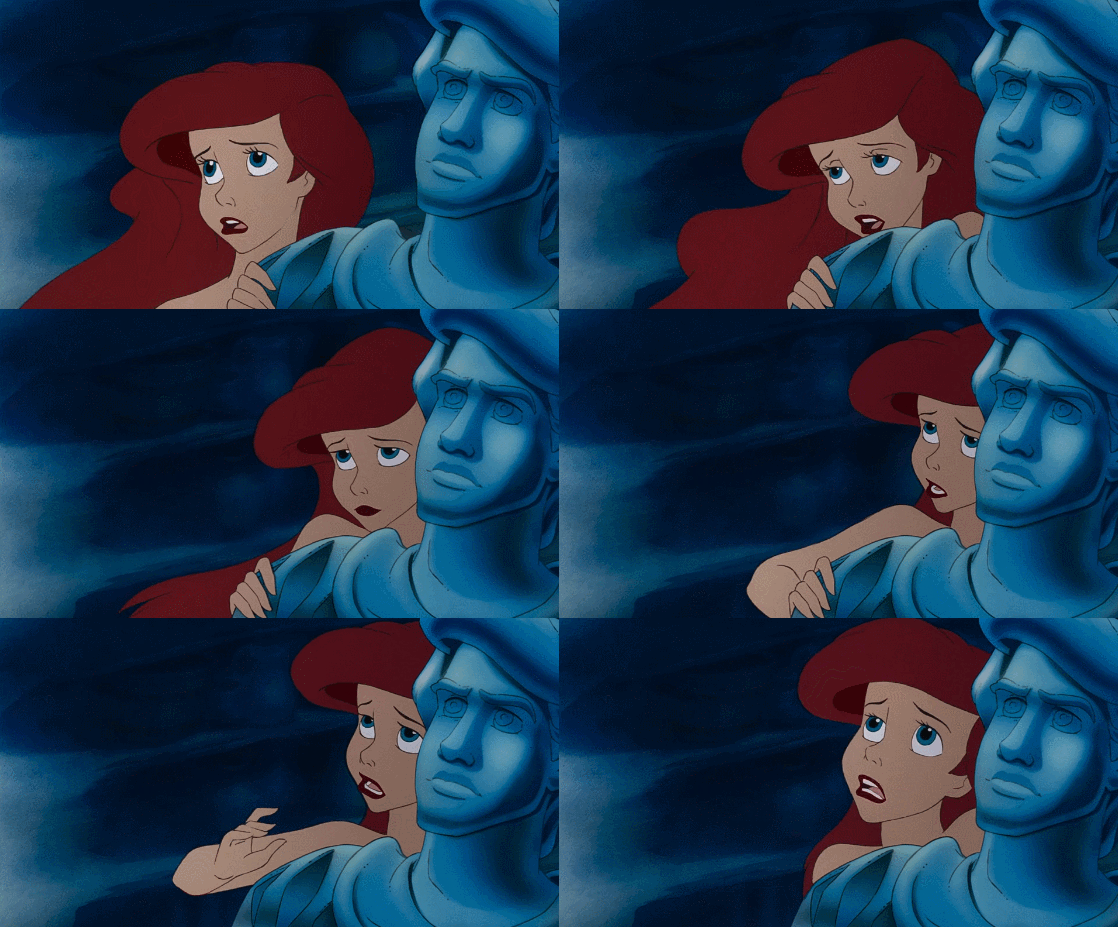
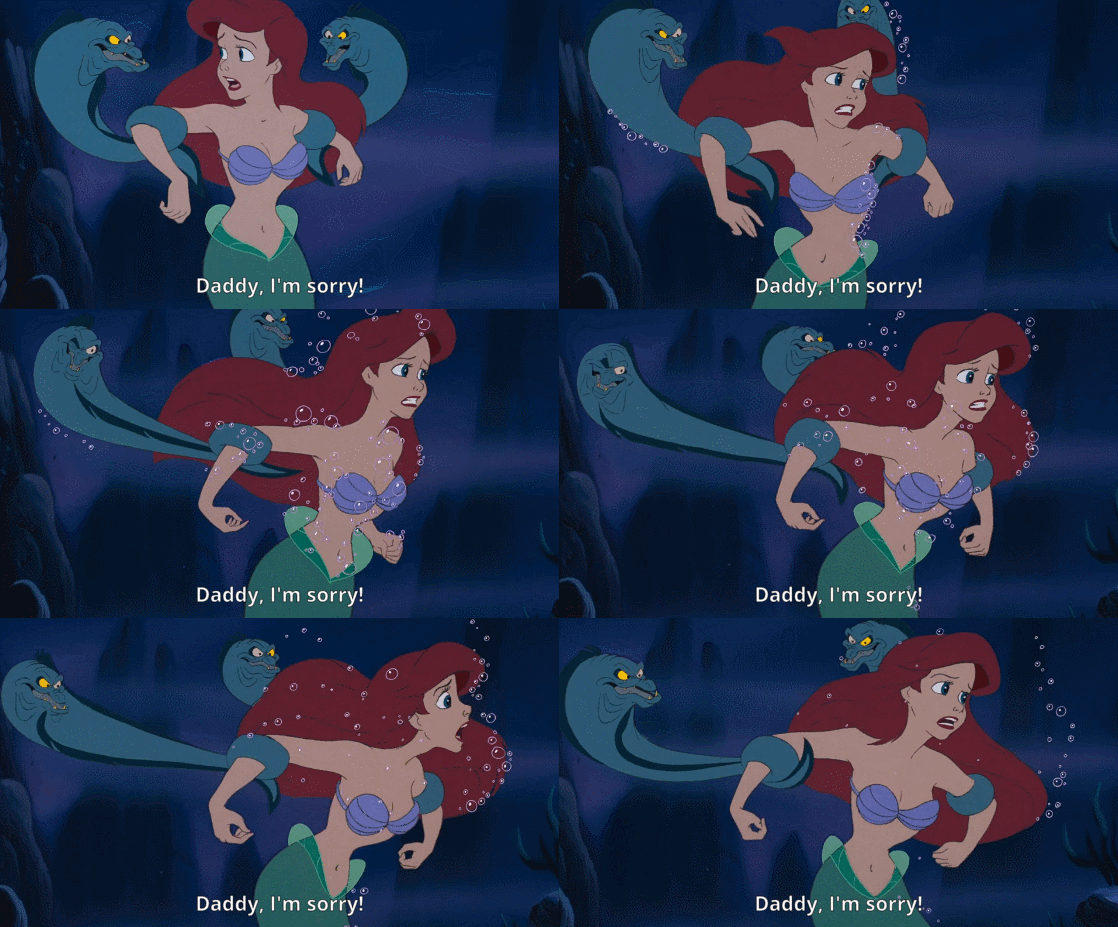
(Also, can I say that Ariel’s body language here breaks my heart every time I see it? She’s swimming away from her father, recoiling…
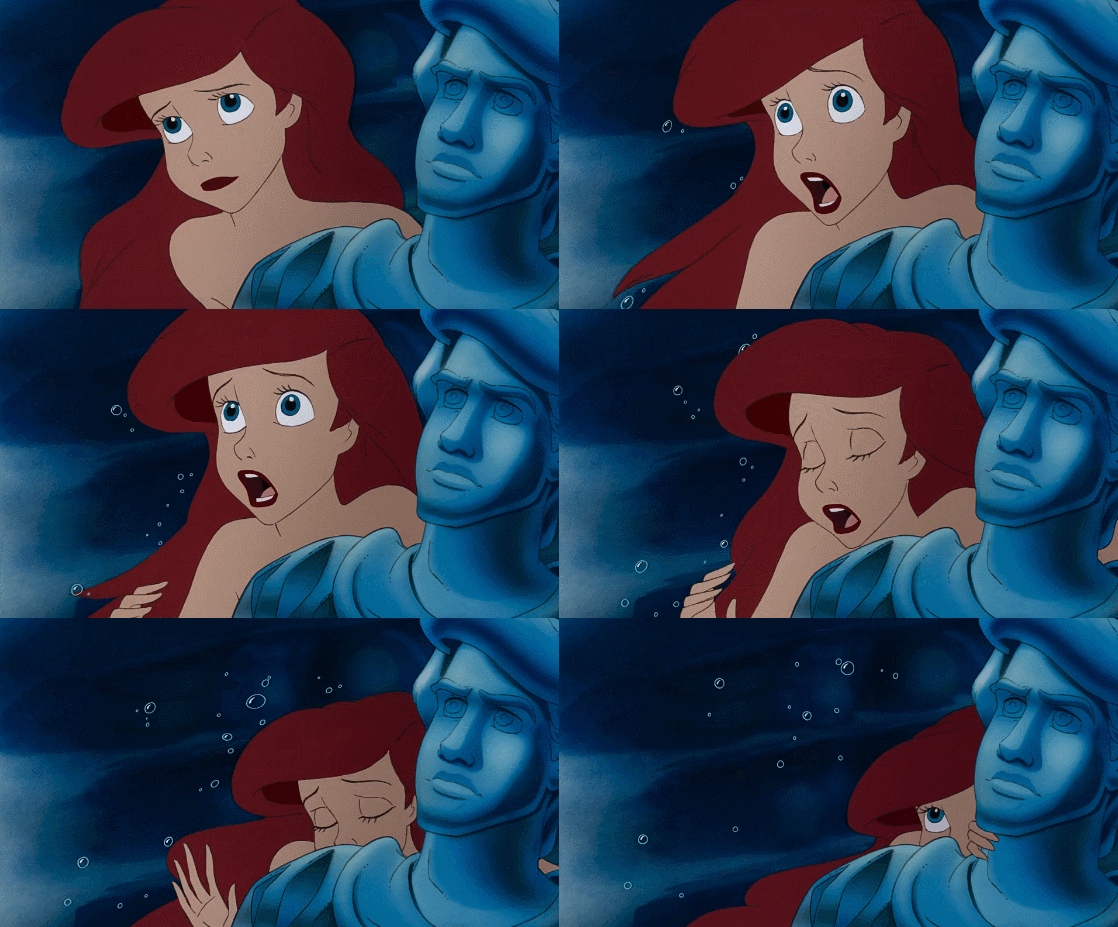
…until she’s cowering behind Eric’s statue. She looks like she’s about to cry as her father pours forth more vitriol…
…and after she bursts out with the exclamation, “Daddy, I love him!”, she’s terrified that she’s said it.)
Triton believes that he alone is in the right and destroys the grotto because he feels it is “the only way” to “get through to” his daughter. He believes he must be cruel only to be kind.
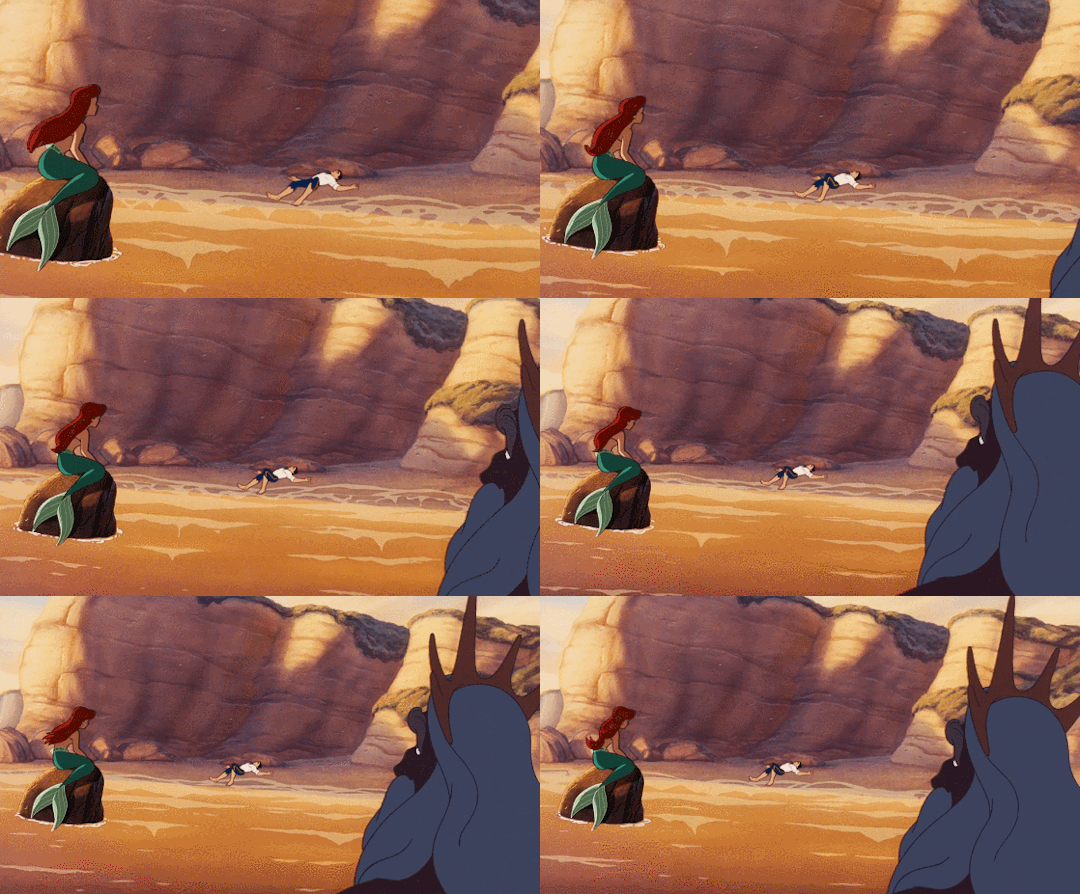
Yet, in the end…
…he only succeeds…
…in being cruel.
Triton’s unwillingness to listen to his daughter
– his unwillingness to treat her with the same respect he demands of her –
only widens the gulf between them.
Ariel does not go to the sea-witch because she has been mooning over a man.
Ariel goes to the sea-witch because she has no voice in her own home. Becoming human, she gains the ability to live life on her own terms. Becoming human, she ironically gains the voice she has been denied for so long.
Ariel goes to the sea-witch because her father sends a message to her – a message that she does not matter, that there is no place for someone like her in Atlantica.
Triton may never have meant to send that message, but send it, he did… and he should be held accountable for that.
Indeed, the film does hold him accountable for that.
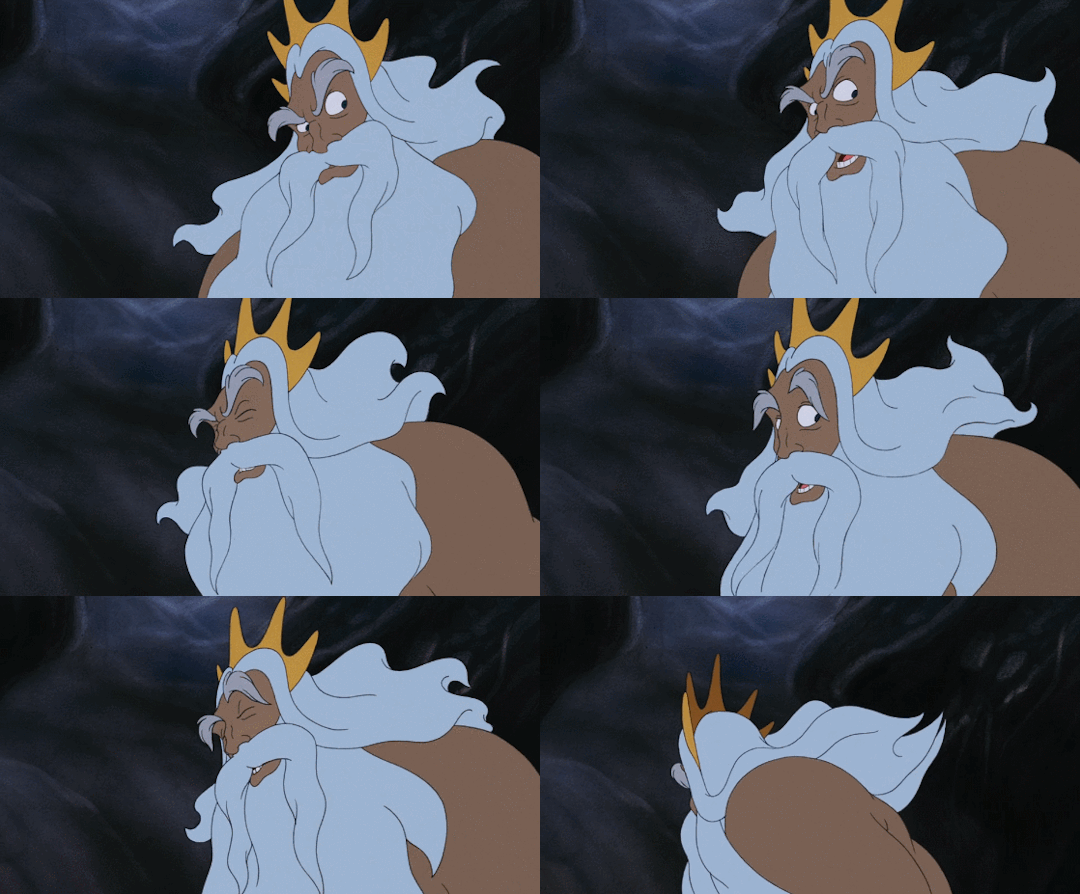
After destroying the grotto, Triton realizes he has done a horrible thing.
Look into his eyes after Ariel falls to weeping:
Look at the regret in his eyes. Look at the remorse. He knows he has gone too far. He never meant to hurt his daughter like this.
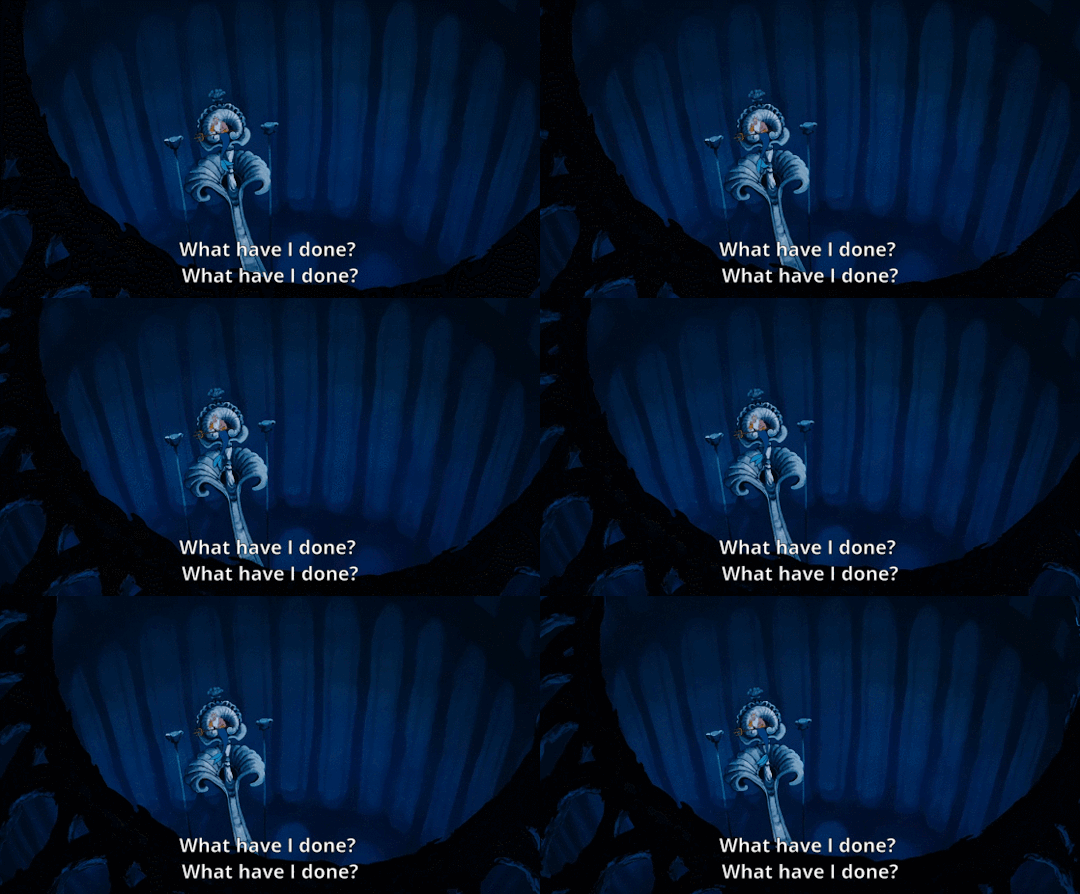
And when Ariel vanishes from Atlantica, Triton takes responsibility for his actions. What does he say when his daughter cannot be found? Does he say, “What folly has my daughter gotten herself into now?”
No. He says:
Simply saying that Ariel ‘gave up [her] voice for a man’ ignores the painful complexity of the situation in which she finds herself. It ignores the depth of her motivation. It ignores Triton’s culpability. It ignores her best character traits and only highlights her flaws (and yes, she has flaws, for she is a multifaceted, well-written character.)
But Ariel’s rejection of prejudice, her ability to see beauty in a group that nearly everyone around her demonizes, her courage and determination and love, are all venerable traits…
…and Ariel’s courage, determination, and love are what inspire Triton to open his heart and change.
Some people say that The Little Mermaid is more Triton’s story than Ariel’s. I disagree and feel that assessment unfairly dismisses Ariel’s emotional journey. Triton has a compelling arc in the film – but that arc is only set in motion because of Ariel’s agency.
He learns from his daughter’s example.
He grows because of her.
Why don’t we talk more about Ariel, the young woman who always challenged her father’s prejudice? Why don’t we talk more about Ariel, who actively spoke out about the flaws she saw in her society? Why don’t we talk more about Ariel, whose actions helped change that society for the better? Why don’t we talk more about Ariel, who formed a bridge between two worlds and enacted positive change?
Why don’t we talk more about that Ariel?
I know Ariel can be impulsive, but she is sixteen years old, and her impulsiveness only makes her character realistic. She makes mistakes but, like her father, she owns up to those mistakes and learns from them:
There are critics of Ariel’s character who want to make the story of The Little Mermaid black and white. Because Triton recognizes Ariel’s impulsiveness, they ignore Triton’s faults and trivialize Ariel.
Yet, the story the film presents is not so black and white. Ariel and Triton are not so one-dimensional.
They both learn from each other and grow together.
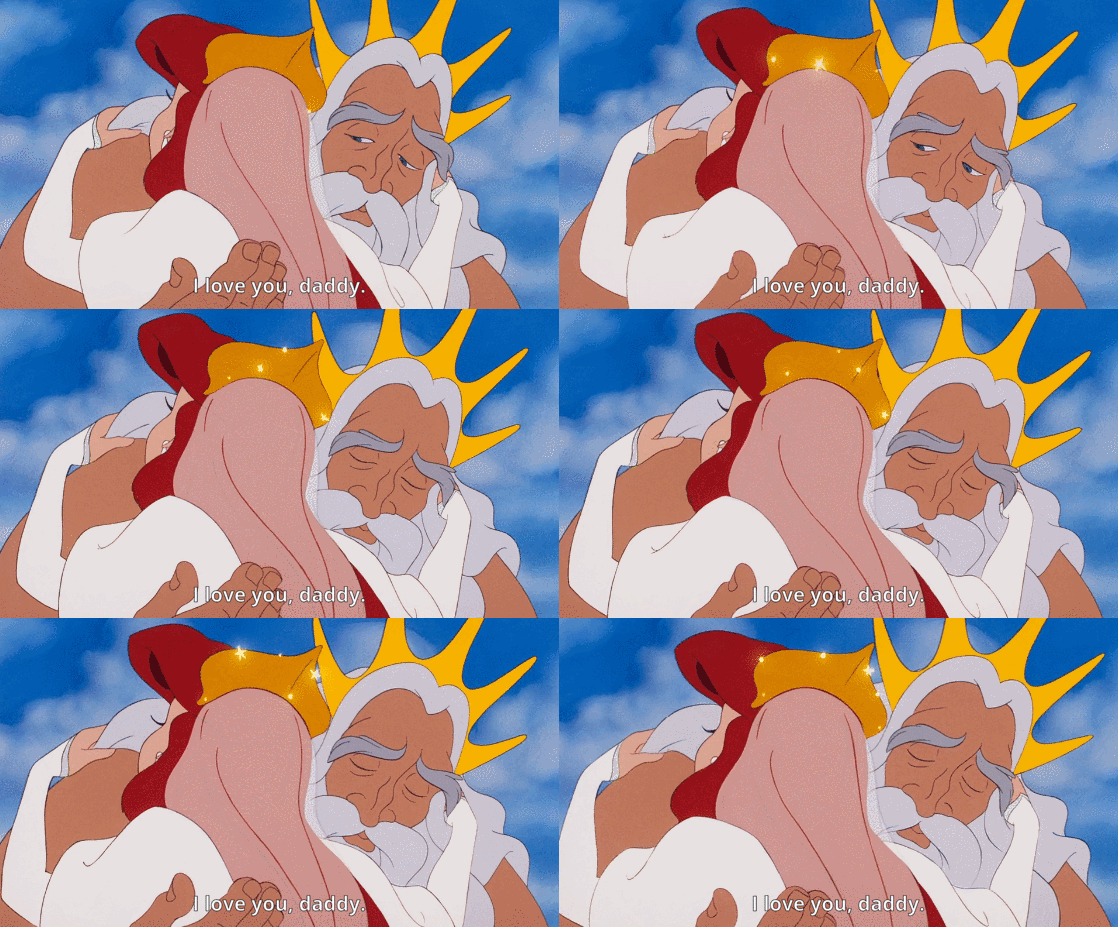
This embrace is so meaningful because, by the end of the film, Triton finally shows Ariel the same respect he asks of her and in so doing, he earns her respect.
Ariel, meanwhile, recognizes her own mistakes and gains a new appreciation for her father.
The Little Mermaid is a beautiful film and Ariel is a brave, inspiring, complex heroine.
HGKFJHGHDKJGF OK SO. At first I thought maybe this was some confusion having to do with Makoto Inoue’s pet flying squirrel (or was it a sugar glider? I can never remember), but I looked at the interview in question, and this is what Arakawa says:
“Although the story’s changed a lot, originally the main characters were going to be a father and son. The protagonist would have been the son, who was 18 years old and had automail. Despite being a prototype Ed, he wasn’t really short. The father was a talking flying squirrel. After a training accident, much like Al’s soul is attached to a suit of armor, the father’s soul was transferred into the body of a flying squirrel. In the end, though, in order to better suit Shonen Gangan’s reader demographic, I reduced the protagonist’s age and made the partner character his brother instead of his father. The reason why Al’s soul is attached to a large suit of armor is because I wanted to make a big character to contrast the small protagonist.”
Al’s sweet. The fandom understands that Al’s sweet. There’s no denying that. But I think people let that perception of Al mask the fact that he’s sassy as shit. Especially toward Ed.
Alphonse “Ohhhh great, now my arm fell off because my brother’s a big fat idiot!” Elric Alphonse “No way we look nothing alike. I don’t have a mean face like my brother. And I’m way taller!” Elric Alphonse “How do you plan to make this work? Because Scar literally tore us apart last time, Ed.” Elric
Alphonse is saucy as all hell and he takes none of Ed’s shit. The boy 400% definitely encouraged the most ridiculous tall tales about the Fullmetal Alchemist which spread around Amestris.
You are 112% right. Gluttony attacks the lot of them and Mustang’s flame attack doesn’t work, so Ed, Al and Mustang just start sprinting for their lives. While they’re running Al’s plan b is literally “Hey let’s leave Mustang behind.”
The exact exchange in the dub is
Ed: sarcastically “Hey, that worked well!” Mustang: “You’ve got something better, be my guest!” Al: “Or we could just leave you behind, Colonel. You’re the one he’s really after!”
The scanlation is even more brutal
“Don’t follow us. It’s targeting you.”
Ice cold, Alphonse Elric.
I answered this ask two years ago and I just realized anon said “short tales” instead of “tall tales” and frankly, that’s canon.
his face here i’m dying
me: *just now gets the meaning of this* me: *cries*
Seriously you guys. I can’t describe in words how much I love this moment, and how DAMN IMPORTANT it is for Ed and Hohenheim’s relationship. There were so many things they didn’t fix, but Ed’s expression in that second to last panel is undeniable. Pure surprise and realization. He realizes his father truly did love his mother in this moment. There’s so much damage his absence caused that couldn’t be undone, but for Ed to know that his father truly loved Trisha is so important. In my humble opinion, that’s probably one of the driving factors behind his decision to not use Hohenheim’s last life to bring Al back. Even though he didn’t have many opportunities to show it openly, Hohenheim did love his family. This moment of vulnerability is just… PERFECT. Ed tried to teach his father a lesson, but ended up learning something himself.
this poor man got cursed with immortality in a way that was highly traumatizing, and yet he refused to get angry at the souls making him immortal, because he recognized they had no say in this situation either. so instead he talks to them, even though the number in the hundreds of thousands, and treats them like people, and keeps their memory going.
Van Hohenheim is too damn pure and good and i’m extremely emotional






 XI's Archived Tumblr Blog