Thanks for sending in a request! Just a warning, this is going to be a very, very long post. There are just so many different styles and kinds of flower crowns out there!
On the 23rd of August 2018, this memorial was officially opened. As you can tell by the name, it was built to commemorate those 22,000+ civilians (as well as serving officers) who died in an unknown place/time after the Soviet Union (SU) occupied our country.
Whether they were arrested and killed for being a threat to the new regime, deported to various prison camps across the SU territory or they didn’t make it through the long, treacherous journey in a cramped up train wagon (meant for animals), which took them away from their homeland, they never came back and their relatives have no idea when or where they died…
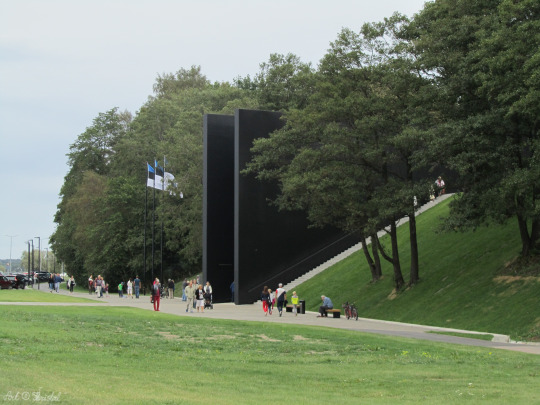
Well, now the victims’ friends and family have a place to go and commemorate them. I visited this memorial 2 days after it was opened to the public and will now share some photos I took to show you what it looks like.
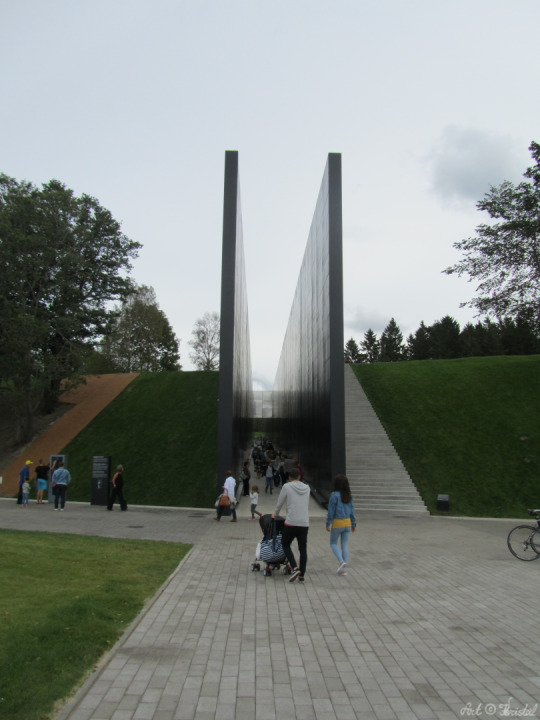
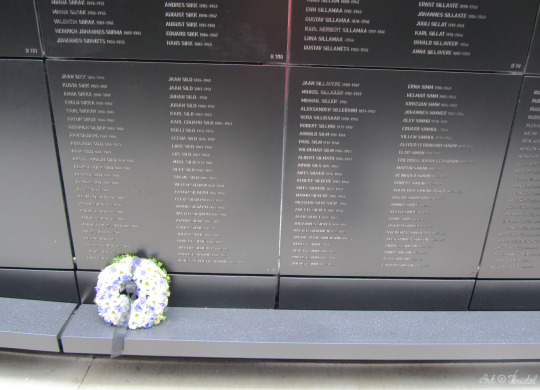
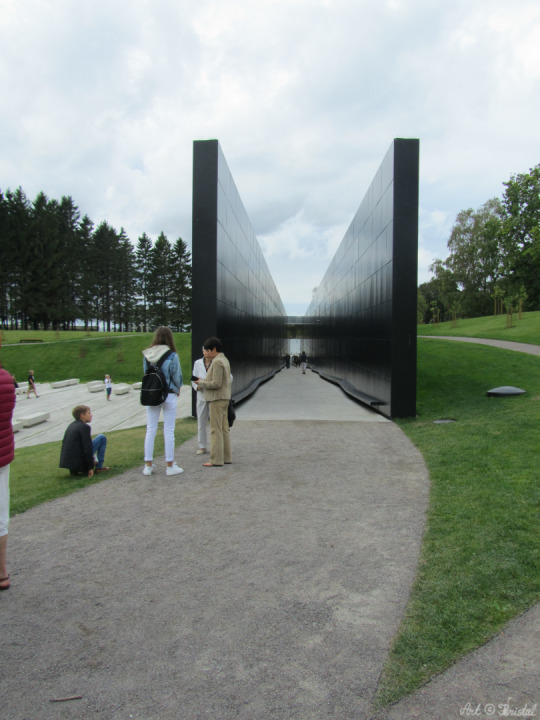
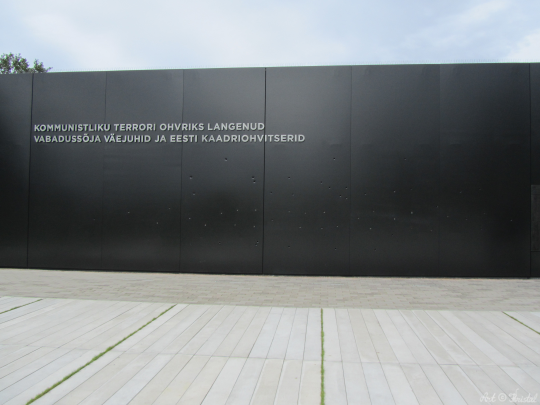
This is the entrance from the outside, which is surrounded by two tall black walls. On the inside of these walls are the 22,000+ victims’ names, inscribed on plaques. If you enter it, you are going on the Journey.
The Journey through these walls symbolises the merciless power of the totalitarian system. It’s supposed to make you feel.. how should I say this?.. Oppressed. You’re surrounded, but you sort of want to break free from this tight space, right? Well, the thing is you can’t, because your freedom has been taken away from you. You can’t break free, not until you come to the end of the Journey. The names on either side of you remind you that not everyone survived this ordeal.
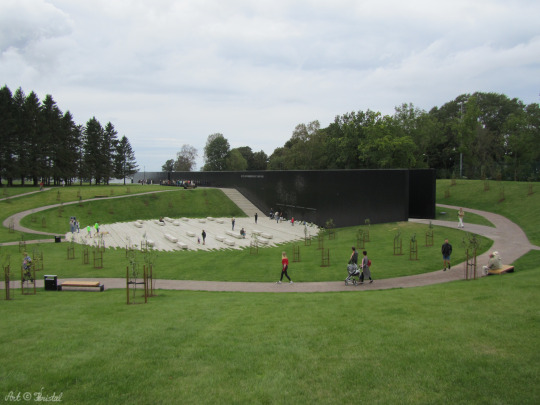
Once you finish the Journey, you reach the Home Garden. I quote: “The Home Garden is a place where dreams, memories and the yearning for home are intertwined. Apple trees and honeybees are the symbols of the Home Garden.” (X)
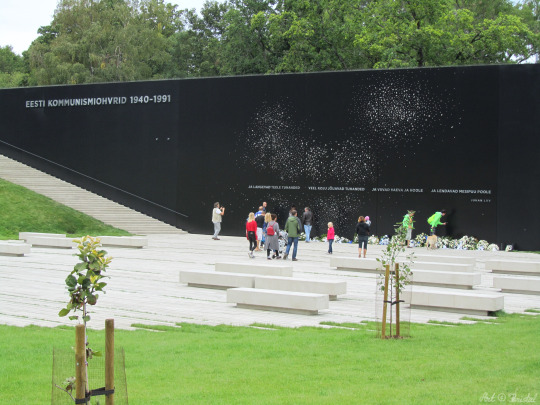
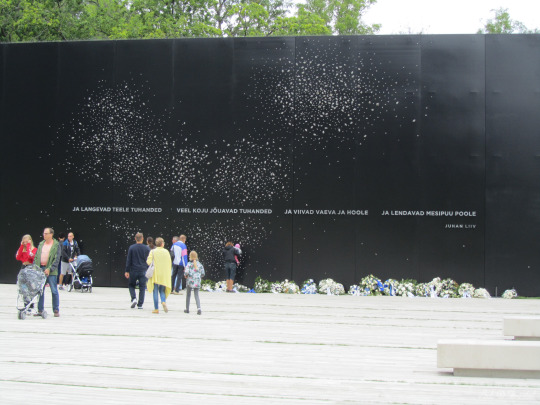
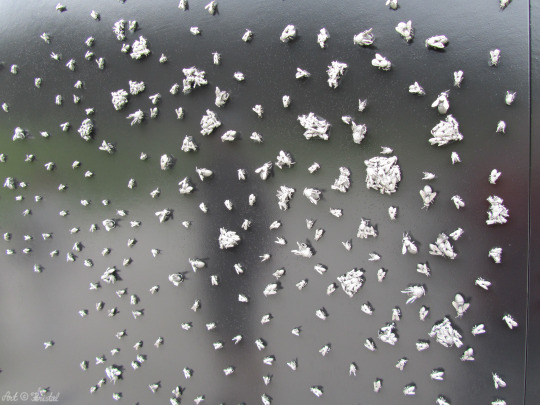
When you move closer to the wall, you can see the honeybees spread across it in bigger or smaller bunches, trying to protect each other. This idea came from a poem entitled “Ta lendab mesipuu poole”, written by an Estonian poet, Juhan Liiv. It’s also been made into a song, which is usually sung during our annual Song Festivals.
The lyrics have a very deep meaning behind them (which is why a lot of the singers cry when they sing this). In a literal meaning, it talks about how a family of bees works hard and some of the workers may die while on duty. But when their home (the honeycomb) is in danger, they hurry back to protect it without hesitation, not caring whether they die in the process or not.
As I interpret/see it, this actually represents Estonians and our love for our country. How we work together through better or worse so we could all live in peace. And when our homeland is being attacked, we come together and defend it with our lives.
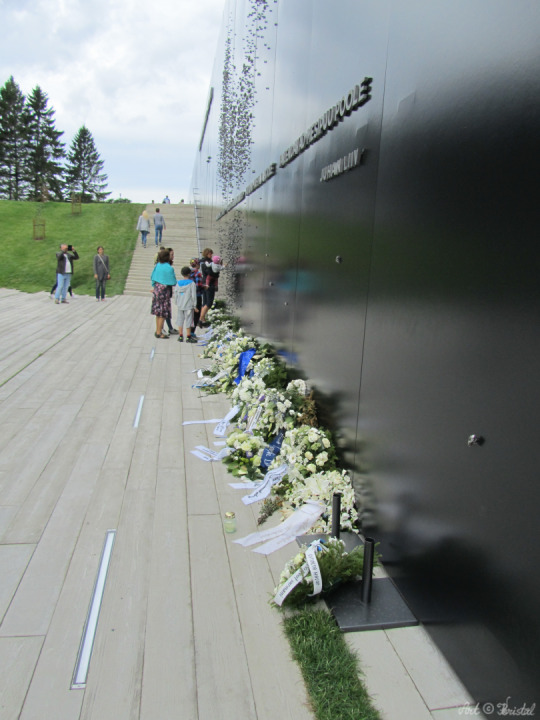
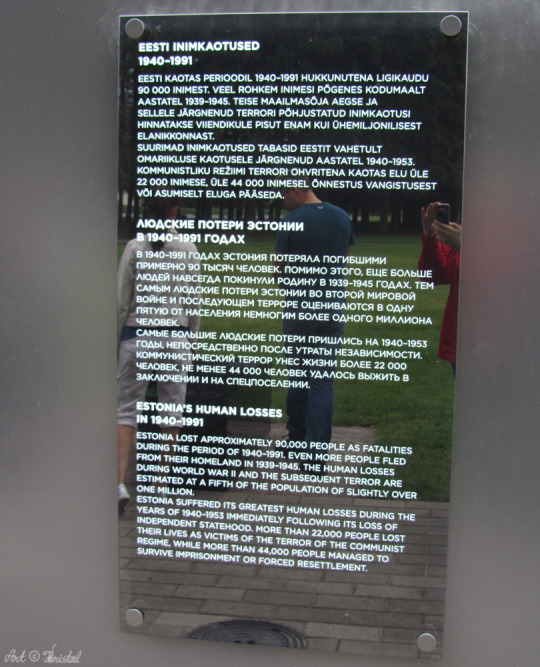
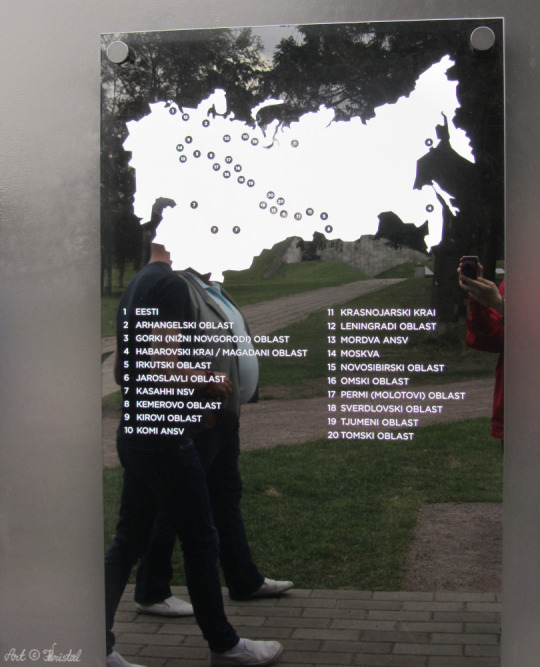
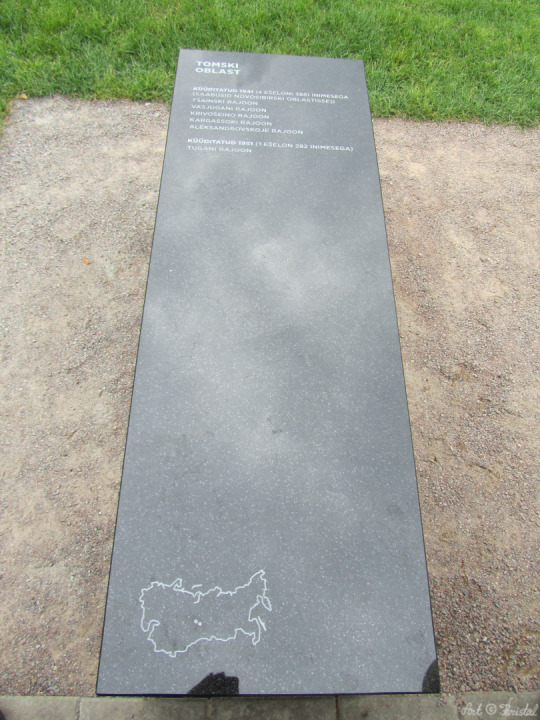
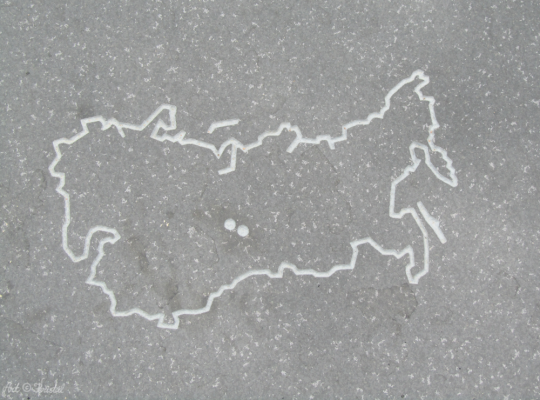
Once you walk past the honeybees and up the stairs, you reach a long row of information texts and location stones (these reminded me of coffins) running along the wall. They contain detailed facts about what happened during those 50 years of communist terror, the stones name the locations where deportees/prisoners were taken/died (along with a map of the SU, showing the locations). I took pictures of every board, but you can all read the texts here.
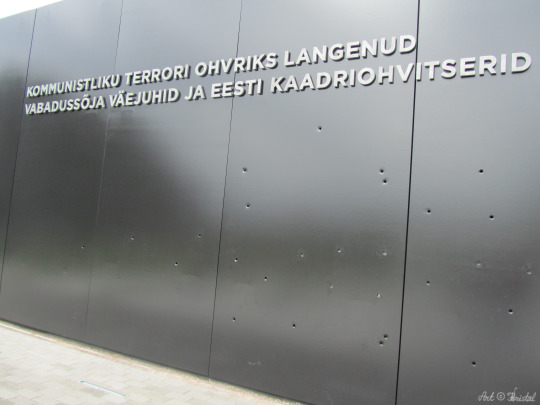
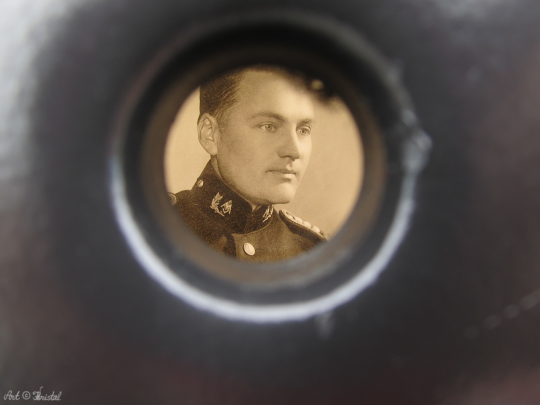
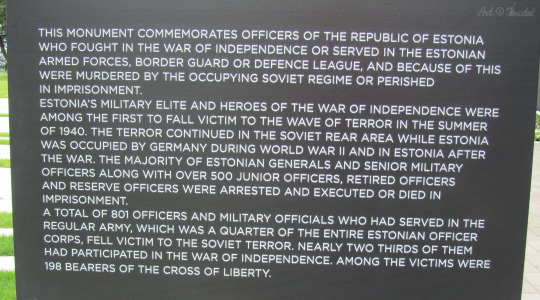
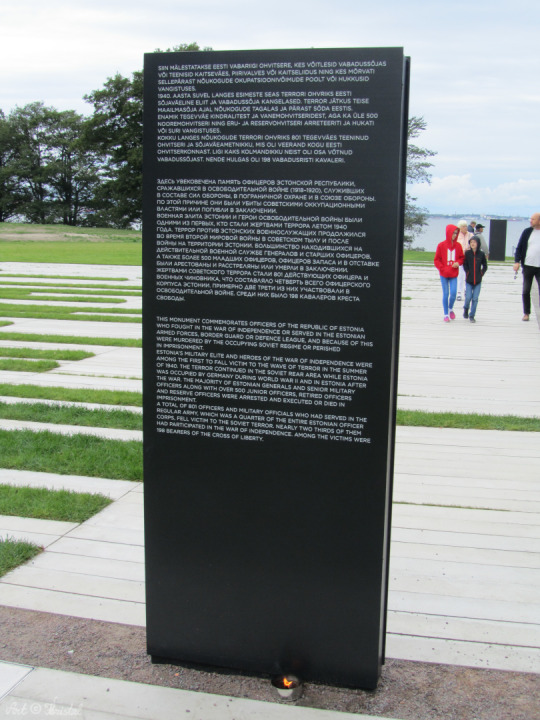
At the beginning, I mentioned that there’s a part of the memorial that commemorates the serving officers who were murdered. Now we reach the final part, and this is what it looks like: bullet holes on the side of the wall. If you peek inside, you will see that most of them contain an old photograph of an officer, who was among the victims.
To me, this memorial also stands as a reminder of why Estonians are on their toes when it concerns our eastern neighbour, Russia, whose “public secret” is that they wish to restore their former glory (i.e. they wish to reconquer Eastern Europe and regain more power in this region). Have you heard what happened to Georgia in 2008? Do you know what’s been going in Eastern Ukraine since 2014?
This is why I hope to live long enough to see the day when Russia apologizes and takes responsibility for its war crimes. These are the reasons why we must never forget – for if we do, we will let history repeat itself.
In conclusion, I’ve read many more historical posts about how/why nazism is bad on this site, but rarely (if at all) have I come across a similar post about communism. The stories that smaller cultures/people/nations have to share about their history aren’t as “popular” or don’t get the attention they deserve. Yet it’s the minorities who we should stand up for and protect.
Please, if you think that others should know more about the history of my people, of my country, then I urge you to reblog this. This will not look ugly on your blog. Thank you for reading (and sharing)!
Well, here it is!! Thank you everyone who participated in this project! It turned out so amazing and there were so many talented artists I got to speak to! I am so glad that a spontaneous passing thought I had one day while doing chores turned into such a stunning display of artist’s work and I am really, really lucky to have been able to host this (: Thank you!
Due to technical issues, I wasn’t able to include a video with all the parts set to music like I had wanted to, however if you have good video editing skills and want to make a video of this, please let me know! I will include it in this post! Please make sure to link back to the original post though 😛























 XI's Archived Tumblr Blog