Accessories designer Tsumire and her daughter Ivy on the street in Harajuku. Both are wearing earrings by Tsumire’s brand The Ivy Tokyo along with handmade fashion, Vivienne Westwood items, Nutty Little Room&Deco, LV, and Dr. Martens. Full Looks
A busker plays music for a blind autistic girl sitting in a wheelchair. She’s being allowed to stim (flapping and rubbing her shirt) and respond to the music her own natural way. The busker places her hand on the guitar to let her see what is creating the music, and she smiles as he sings to her.
They made a connection.
That is autism acceptance.
Take note. Many autistic people will open up to you like a flower if you gently connect with them in ways that work for them instead of forcing them to connect with you in ways that only work for you.
I hope that sweet kid grows up to be a musician or artist! 🙂
In a simple experiment, researchers at the University of Chicago sought to find out whether a rat would release a fellow rat from an unpleasantly restrictive cage if it could. The answer was yes.
The free rat, occasionally hearing distress calls from its compatriot, learned to open the cage and did so with greater efficiency over time. It would release the other animal even if there wasn’t the payoff of a reunion with it. Astonishingly, if given access to a small hoard of chocolate chips, the free rat would usually save at least one treat for the captive — which is a lot to expect of a rat.
The researchers came to the unavoidable conclusion that what they were seeing was empathy — and apparently selfless behavior driven by that mental state.
Giant tarantulas keep tiny frogs as pets. Insects will eat the burrowing tarantulas’ eggs – so the spiders protect the frogs from predators, and in return the frogs eat the insects. Source
This has blown my mind for years. It’s so unreal. It’s almost the same exact reason humans and cats started living together.
Tiny frogs are tarantula housecats. A science fact seldom gets to sound that much like meaningless word salad.
This is legit, guys. And I’m excited about it.
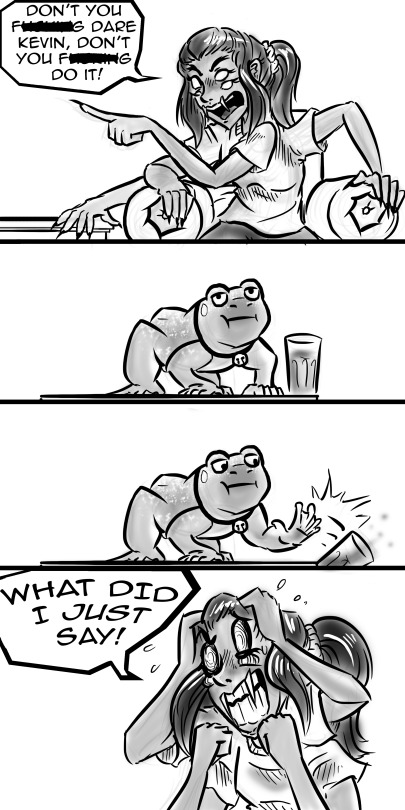
Someone needs to draw a tarantula person with a tiny pet housefrog now. Please let this be a thing.

 XI's Archived Tumblr Blog